 BRAINCAKE
Mass Flow Hypothesis
The mass flow hypothesis (proposed by Ernst Münch) explains how phloem sap moves from source to sink. Mass flow is the bulk movement of a liquid, with everything dissolved in it, down a pressure gradient.
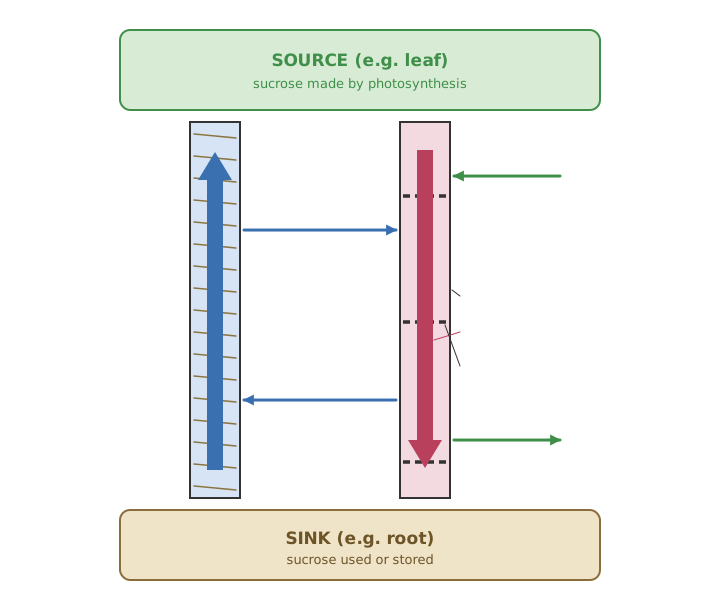
At the source
Sign in free to see the rest of this lesson, the R.E.C.I.P.E. recall steps and the quiz
BrainCake is free. Make an account in seconds and pick up where this page stops.
Key terms in this lesson
- hydrostatic pressure
- The pressure a fluid exerts on the walls of its container; in a capillary it pushes fluid out through the gaps between the endothelial cells.
- water potential
- A measure of the tendency of water molecules to move out of a solution; water moves from a higher to a lower (more negative) water potential.
More in Transport in Plants
- Factors Affecting Transpiration
- Root Pressure
- Translocation in the Phloem
- Phloem Loading
- The Symplast Pathway
- The Apoplast Pathway
- Phloem Unloading
- Pressure Flow Hypothesis
All 21 lessons in Transport in Plants · All Edexcel AS-level Biology topics