 BRAINCAKE
Bacterial Cell
Bacteria are prokaryotic cells. They are much smaller and simpler than eukaryotic cells, typically about 0.5 to 5 µm long, and have no nucleus and no membrane-bound organelles.
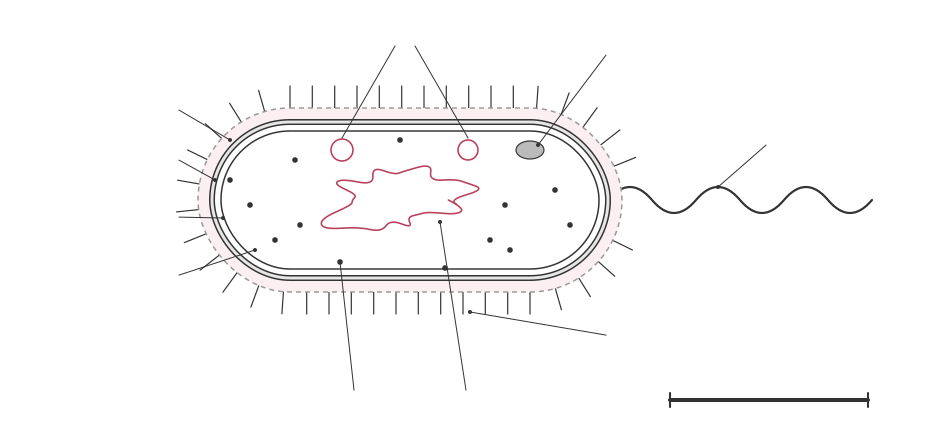
Structures found in all bacterial cells
• Cell wall: made of peptidoglycan (murein), a polymer of sugars cross-linked by short chains of amino acids. It gives shape and strength and stops the cell bursting by osmosis. It is not made of cellulose.
• Cell surface membrane: controls entry and exit of substances.
• Cytoplasm containing 70S ribosomes, smaller than the 80S ribosomes of eukaryotic cytoplasm.
Sign in free to see the rest of this lesson, the R.E.C.I.P.E. recall steps and the quiz
BrainCake is free. Make an account in seconds and pick up where this page stops.
Key terms in this lesson
- prokaryotic cell
- A cell with no nucleus and no membrane-bound organelles, such as a bacterial cell, whose DNA is circular and free in the cytoplasm.
More in Prokaryotic Cells
- Pili and Flagella
- Cell Surface Membrane
- Plasmids
- Nucleoid
- 70S Ribosomes
- Gram-Staining
- Antibiotics
- Alternative Classification of Bacteria
All 31 lessons in Prokaryotic Cells · All Edexcel AS-level Biology topics