 BRAINCAKE
Allopatric Speciation
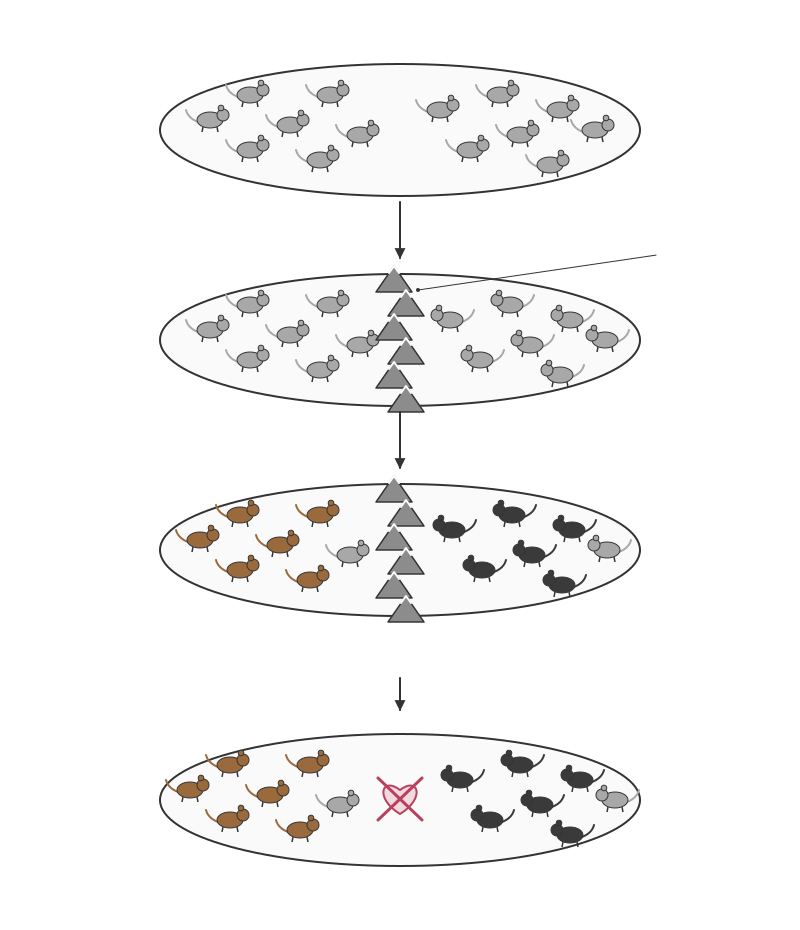
Allopatric speciation is speciation that happens when populations are separated by a geographical barrier. 'Allopatric' means 'different homeland'. It is thought to be the most common way that new animal species form.
The stages are:
1. Separation. A physical barrier divides a population, for example a rising sea level cutting off an island, a river changing course, a mountain range forming, or a few individuals colonising a remote island.
Sign in free to see the rest of this lesson, the R.E.C.I.P.E. recall steps and the quiz
BrainCake is free. Make an account in seconds and pick up where this page stops.
Key terms in this lesson
- reproductive isolation
- The prevention of gene flow between populations, so they cannot interbreed to produce fertile offspring.
- selection pressure
- An environmental factor that affects the chance of survival and reproduction of organisms with a particular allele or characteristic.
More in Natural Selection
- Antibiotic Resistance
- Preventing Antibiotic Resistance
- Speciation
- Types of Isolation
- Endemic Species
- Desert Pupfish
- Adaptive Radiation
- Sympatric Speciation
All 29 lessons in Natural Selection · All Edexcel AS-level Biology topics