 BRAINCAKE
Mitochondria
Mitochondria (singular: mitochondrion) are the sites of aerobic respiration, where most of a cell's ATP is made. They are usually rod-shaped or oval, about 1 µm wide and 1 to 10 µm long.
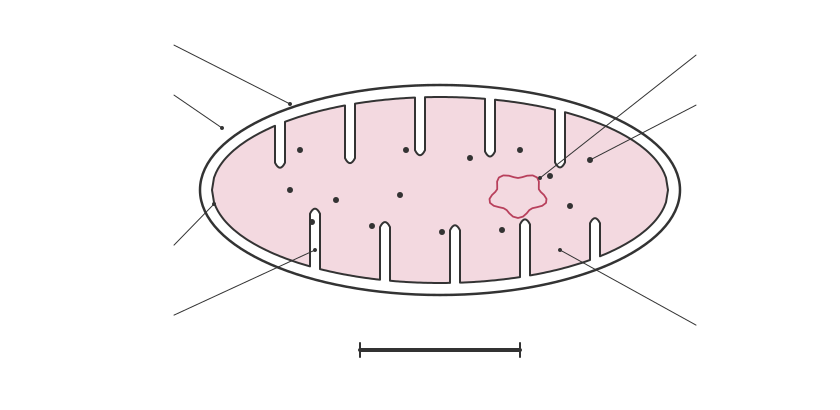
Structure
• Double membrane (envelope): the outer membrane is smooth; the inner membrane is folded into cristae.
• The cristae give a large surface area for the proteins of the electron transport chain and the enzyme ATP synthase, which make ATP (oxidative phosphorylation).
• The matrix is the fluid inside the inner membrane. It contains the enzymes of the link reaction and Krebs cycle.
Sign in free to see the rest of this lesson, the R.E.C.I.P.E. recall steps and the quiz
BrainCake is free. Make an account in seconds and pick up where this page stops.
Key terms in this lesson
- atp synthase
- An enzyme, found in mitochondria, chloroplasts and cell membranes, that catalyses the synthesis of ATP from ADP and inorganic phosphate.
- krebs cycle
- A cyclic series of enzyme-catalysed reactions in the mitochondrial matrix that breaks down acetate, releasing reduced coenzymes used to make ATP.
More in Eukaryotic Cells
All 30 lessons in Eukaryotic Cells · All Edexcel AS-level Biology topics