 BRAINCAKE
Gel Electrophoresis
Gel electrophoresis separates fragments of DNA (or proteins) according to their size. It is used to compare the DNA of different organisms.
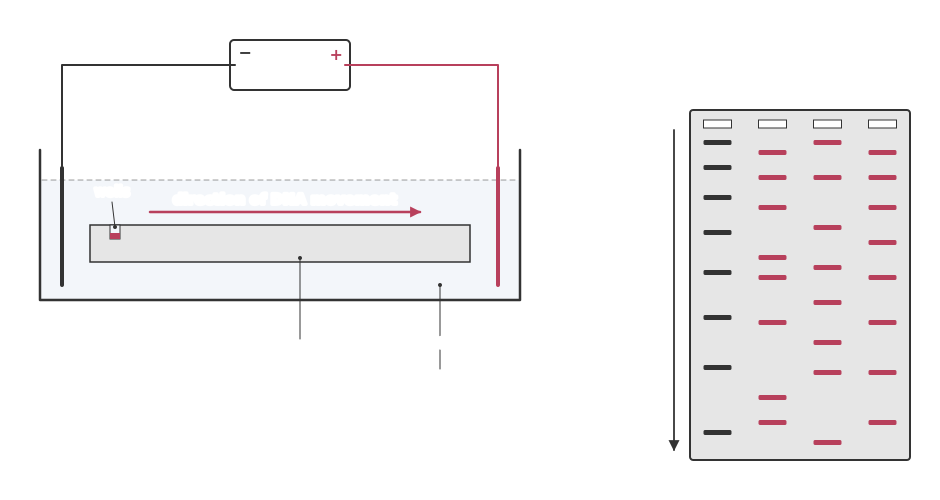
The method:
1. DNA is cut into fragments using restriction enzymes, which cut at specific base sequences.
2. The fragments are loaded into wells at one end of an agarose gel, which sits in a tank of buffer solution. The wells are at the negative electrode (cathode) end.
3. A voltage is applied across the gel. DNA is negatively charged because of its phosphate groups, so the fragments move through the gel towards the positive electrode (anode).
Sign in free to see the rest of this lesson, the R.E.C.I.P.E. recall steps and the quiz
BrainCake is free. Make an account in seconds and pick up where this page stops.
More in Classification
- Identifying a Species
- DNA Barcode
- DNA Analysis and Proteomics
- New Evolutionary Models
- Biochemical Relationships
- More Biochemical Relationships
- Domains
- Kingdoms
All 19 lessons in Classification · All Edexcel AS-level Biology topics