In 1990, Carl Woese proposed the three-domain system. The domain is the highest taxonomic rank, above kingdom. The three domains are Bacteria, Archaea and Eukarya. The system was based mainly on differences in the base sequences of ribosomal RNA, supported by differences in cell structure and biochemistry.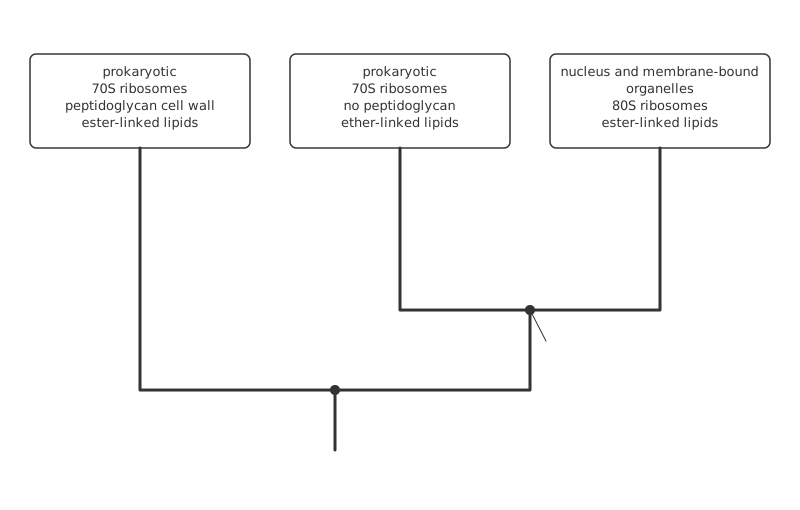
• prokaryotic: no nucleus or membrane-bound organelles, 70S ribosomes
• cell walls contain peptidoglycan (murein)
• membrane lipids have ester bonds
• examples: E. coli, StaphylococcusArchaea
• prokaryotic, with 70S ribosomes
• cell walls do not contain peptidoglycan
• membrane lipids have ether bonds and branched chains, which helps many archaea survive extreme conditions such as hot springs and very salty water
• their RNA polymerase is more complex, like that of eukaryotes, and some have histone proteins associated with their DNAEukarya
• eukaryotic: a membrane-bound nucleus and membrane-bound organelles such as mitochondria, 80S ribosomes in the cytoplasm
• membrane lipids have ester bonds
• includes animals, plants, fungi and protoctistsAlthough Archaea look like bacteria, their molecular features show that Archaea are more closely related to Eukarya than to Bacteria. This is why prokaryotes can no longer be treated as one group.