In a double circulation system, blood passes through the heart twice for each complete circuit of the body. Mammals and birds have a double circulation.There are two separate circuits:• the pulmonary circulation: right side of the heart → lungs → left side of the heart. Deoxygenated blood is oxygenated in the lungs.
• the systemic circulation: left side of the heart → body tissues → right side of the heart. Oxygenated blood delivers oxygen to the organs.The mammalian heart has four chambers: two atria and two ventricles. The septum separates the right side, which contains deoxygenated blood, from the left side, which contains oxygenated blood, so the two never mix.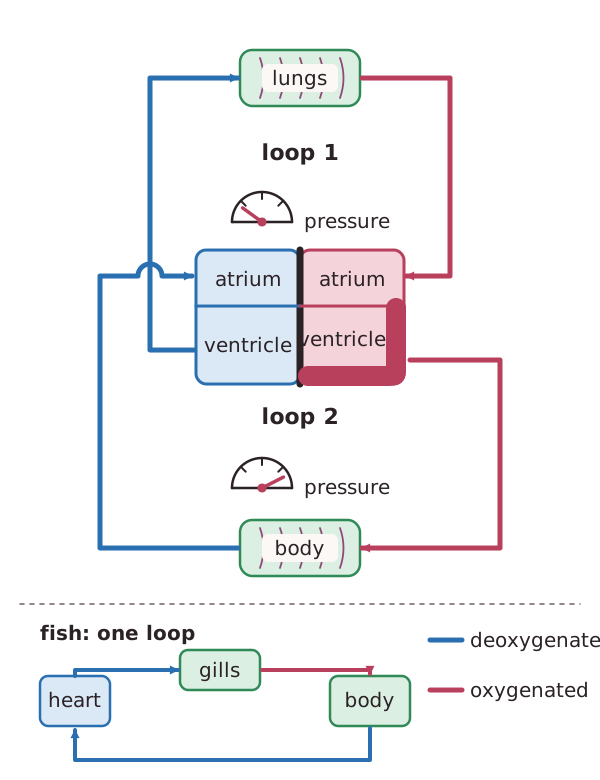 The advantages of a double circulation are:• after passing through the lungs, blood returns to the heart and is pumped again, so it reaches the body at high pressure and flows quickly. Oxygen and glucose are delivered rapidly, supporting the high metabolic rate of endotherms.
• the two circuits can work at different pressures. Blood is sent to the lungs at a lower pressure, which avoids damaging the delicate alveolar capillaries and stops too much tissue fluid forming in the lungs. The left ventricle has a much thicker muscular wall and pumps blood to the body at a higher pressure.
• keeping oxygenated and deoxygenated blood separate means blood reaching the tissues is as fully oxygenated as possible, keeping diffusion gradients steep.A double circulation therefore suits large, active, endothermic animals.
• the systemic circulation: left side of the heart → body tissues → right side of the heart. Oxygenated blood delivers oxygen to the organs.The mammalian heart has four chambers: two atria and two ventricles. The septum separates the right side, which contains deoxygenated blood, from the left side, which contains oxygenated blood, so the two never mix.
The advantages of a double circulation are:• after passing through the lungs, blood returns to the heart and is pumped again, so it reaches the body at high pressure and flows quickly. Oxygen and glucose are delivered rapidly, supporting the high metabolic rate of endotherms.• the two circuits can work at different pressures. Blood is sent to the lungs at a lower pressure, which avoids damaging the delicate alveolar capillaries and stops too much tissue fluid forming in the lungs. The left ventricle has a much thicker muscular wall and pumps blood to the body at a higher pressure.
• keeping oxygenated and deoxygenated blood separate means blood reaching the tissues is as fully oxygenated as possible, keeping diffusion gradients steep.A double circulation therefore suits large, active, endothermic animals.