 BRAINCAKE
Transport Across the Cell Membrane
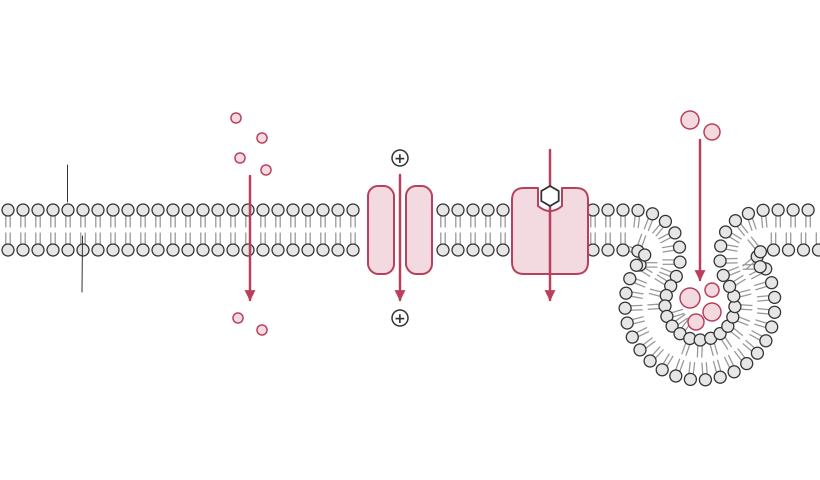
The cell surface membrane is partially permeable: it lets some substances through but not others. How a substance crosses depends on its size, charge and whether it is soluble in lipids.
The membrane is a phospholipid bilayer, with proteins, cholesterol and glycoproteins in it (the fluid mosaic model). The fatty acid tails form a hydrophobic core in the middle of the membrane.
Sign in free to see the rest of this lesson, the R.E.C.I.P.E. recall steps and the quiz
BrainCake is free. Make an account in seconds and pick up where this page stops.
Key terms in this lesson
- fluid mosaic model
- The model describing the cell surface membrane as a phospholipid bilayer with proteins that can move freely within it.
More in Cell Transport Mechanisms
- The Need for Transport
- Passive and Active Transport
- Diffusion
- Facilitated Diffusion
- Water Potential ψ
- Osmosis
- Modelling Osmosis
- Osmotic Concentrations
All 18 lessons in Cell Transport Mechanisms · All Edexcel AS-level Biology topics