 BRAINCAKE
Gene Mutations
A change in the sequence of DNA is called a gene mutation.
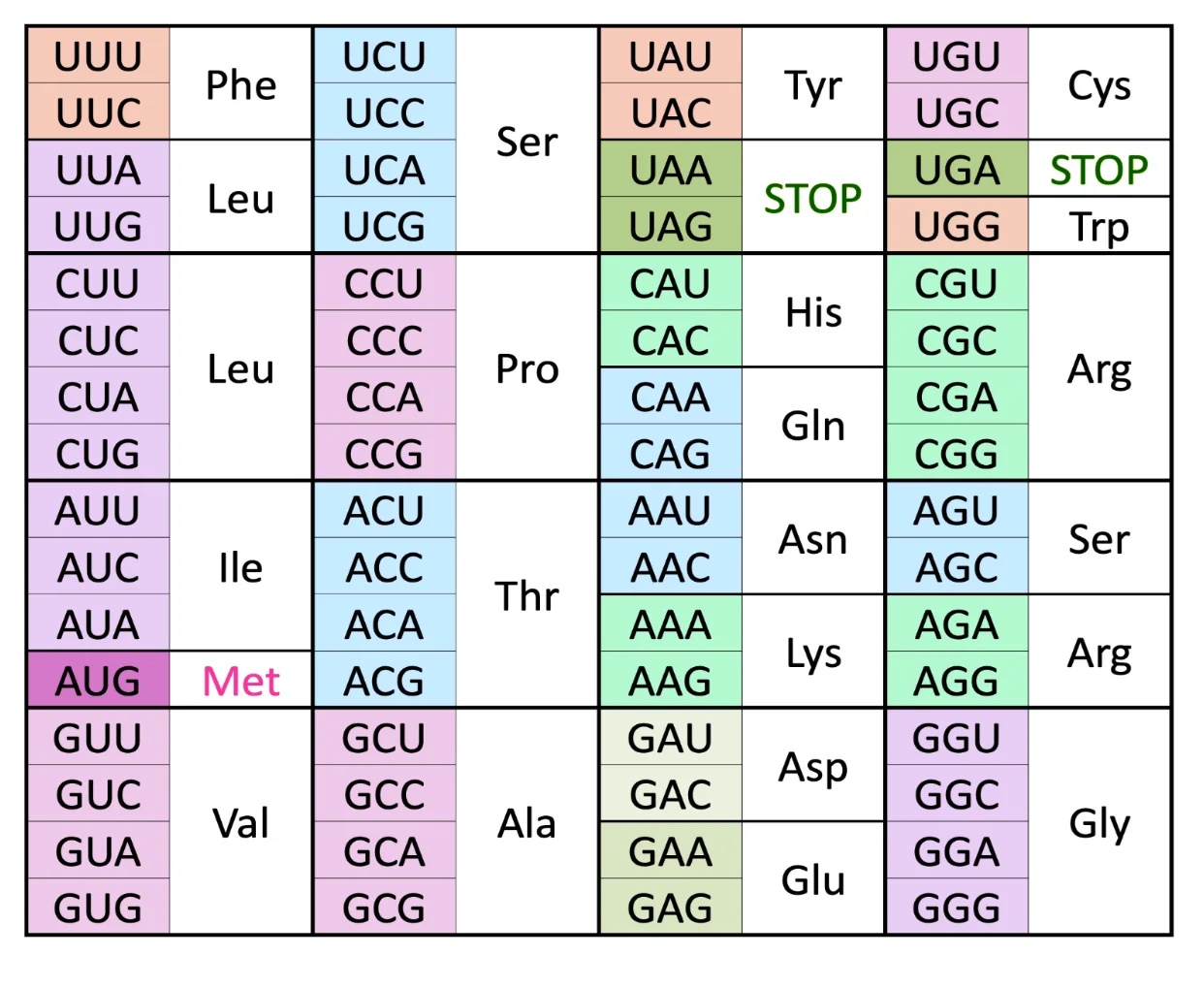
This change will be copied to an mRNA strand and translated into a protein.
This could lead to a different sequence of amino acids and this may affect the secondary, tertiary and quaternary structures of the protein leading to a protein that functions differently or does not function at all.
Sign in free to see the rest of this lesson, the R.E.C.I.P.E. recall steps and the quiz
BrainCake is free. Make an account in seconds and pick up where this page stops.
Key terms in this lesson
- nucleotide
- A molecule made of a pentose sugar, a phosphate group and a nitrogen-containing base.
- gene
- A length of DNA that codes for a polypeptide or a functional RNA molecule, at a specific locus on a chromosome.
- codon
- A sequence of three bases on mRNA that codes for a specific amino acid or a stop signal.
- mutation
- A random change in the amount, arrangement or base sequence of the DNA of an organism.
More in Genetic Diversity
- Mutations
- Chromosome Mutations
- Substitution of Bases
- Deletion of Bases
- Polyploidy and Hybrids
- Meiosis
- The Process of Meiosis
- Genetic Recombination by Crossing Over
All 19 lessons in Genetic Diversity · All AQA AS-level Biology topics