The transmission electron microscope passes a beam of electrons through a thin specimen and focuses the electrons that have passed through the specimen onto a screen to form a two-dimensional image.It has a resolution of 0.5nm.The specimen is prepared by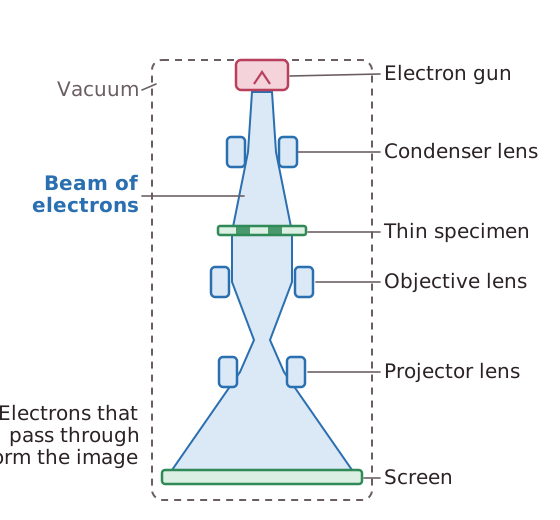
- fixing (cross-linking) the proteins with aldehyde
- fixing lipids such as the cell membranes with a substance that forms a black insoluble precipitate on the lipid for contrast
- adding heavy metal salts for additional contrast
- dehydrating the specimen with ethanol
- embedding in resin and curing into a hard block using heat or UV light
- sectioning into thin slice