 BRAINCAKE
Primary Succession
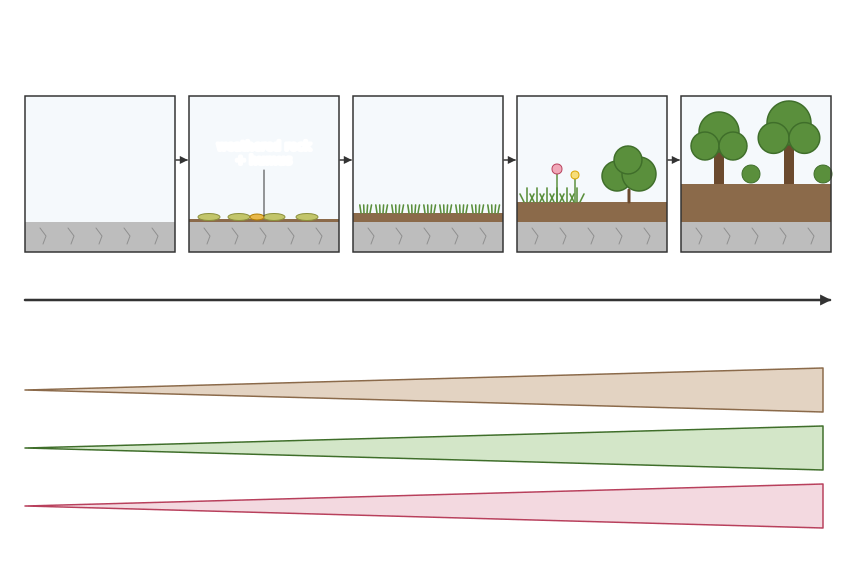
Succession is the gradual change in the community of an area over time. Primary succession starts on bare ground where there is no soil and no previous life, such as bare rock after a glacier retreats, cooled volcanic lava or newly formed sand dunes.
The stages are:
• Pioneer species colonise first. On bare rock these are usually lichens and algae. They are adapted to harsh conditions: they tolerate drying out and extreme temperatures, need few nutrients and spread by spores carried on the wind. Lichens slowly break down the rock surface (weathering).
• When pioneers die, they are decomposed and form humus. Mixed with weathered rock particles, this makes a thin, simple soil that holds water and mineral ions.
Sign in free to see the rest of this lesson, the R.E.C.I.P.E. recall steps and the quiz
BrainCake is free. Make an account in seconds and pick up where this page stops.
More in The Nature of Ecosystems
- Community
- Abiotic Factors
- Biotic Factors
- Biosphere
- Climax Community
- Secondary Succession
- Case Study: Sand Dune Succession
- Light
All 39 lessons in The Nature of Ecosystems · All Edexcel A-level Biology topics