 BRAINCAKE
Predation
Predation is when one animal (the predator) kills and eats another (the prey). It is a biotic factor that affects the size of both populations.
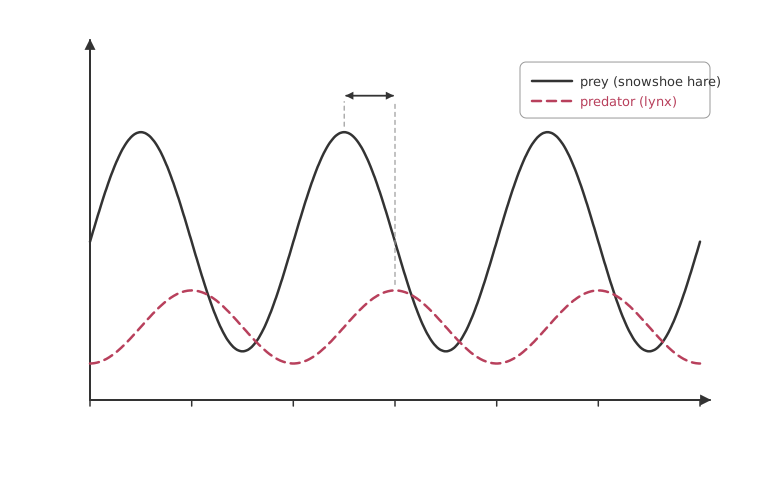
In a simple system where a predator depends mainly on one prey species, the populations often rise and fall in regular cycles:
• When prey are plentiful, predators have plenty of food, survive and breed well, so the predator population increases.
• More predators eat more prey, so the prey population falls.
• With less food, fewer predators survive and breed, so the predator population falls.
• With fewer predators, more prey survive, so the prey population rises again, and the cycle repeats.
Sign in free to see the rest of this lesson, the R.E.C.I.P.E. recall steps and the quiz
BrainCake is free. Make an account in seconds and pick up where this page stops.
Key terms in this lesson
- selection pressure
- An environmental factor that affects the chance of survival and reproduction of individuals with a particular allele.
More in The Nature of Ecosystems
- Wind and Water Currents
- Water Availability
- Oxygen Availability
- Edaphic Factors
- Finding a Mate
- Territory
- Parasitism and Disease
- Case Study: Snowshoe Hare and Lynx
All 39 lessons in The Nature of Ecosystems · All Edexcel A-level Biology topics