 BRAINCAKE
Case Study: Snowshoe Hare and Lynx
A classic case study of how two populations interact comes from the snowshoe hare and its predator, the Canada lynx, in the forests of northern Canada. The Hudson's Bay Company kept records of the number of pelts sold by trappers for about a century, and these show that both populations rise and fall in a regular cycle of roughly 10 years.
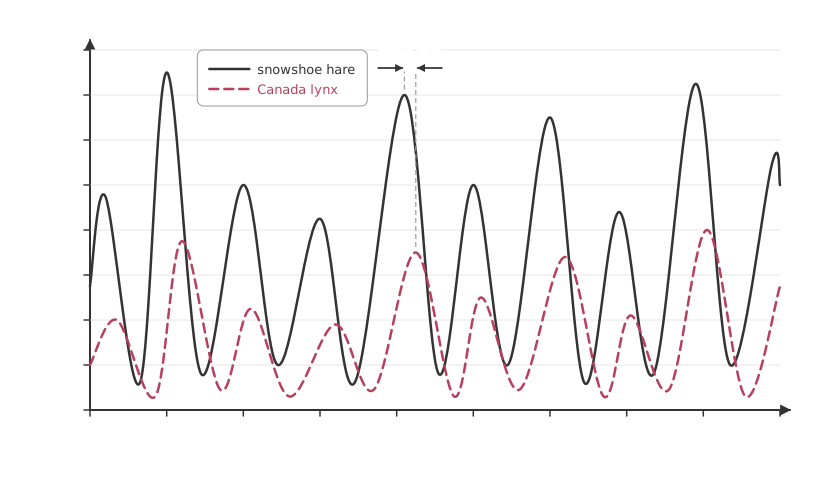
The cycle follows a repeating pattern:
1. With plenty of food, the hare population grows.
2. More hares mean more food for lynx, so more lynx survive and breed and the lynx population rises.
3. More lynx eat more hares, and the hares also run short of food (twigs and shoots), so the hare population falls.
Sign in free to see the rest of this lesson, the R.E.C.I.P.E. recall steps and the quiz
BrainCake is free. Make an account in seconds and pick up where this page stops.
More in The Nature of Ecosystems
- Predation
- Finding a Mate
- Territory
- Parasitism and Disease
- Case Study: Red Grouse and Parasites
- Density Dependent Factors
- Density Independent Factors
- Competition
All 39 lessons in The Nature of Ecosystems · All Edexcel A-level Biology topics