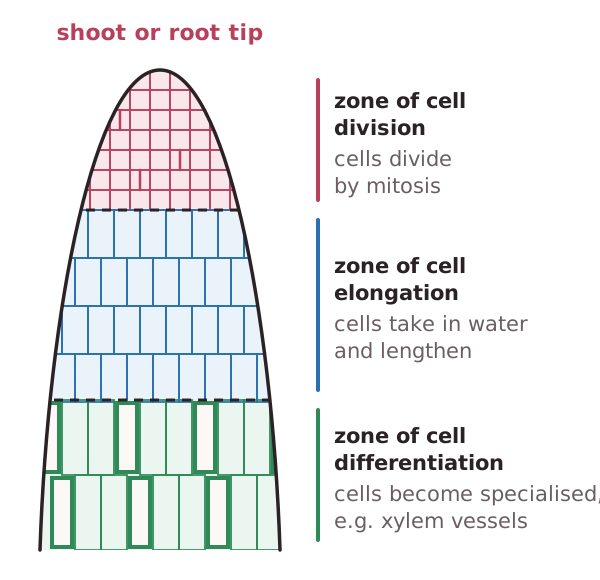
Gibberellins also affect the length of the internodes by stimulating cell elongation. Auxins and gibberellins work synergistically in the growth of stems. ABA and gibberellins work antagonistically in the germination of seeds.Many varieties of dwarf plants exist where gibberellin is not synthesised. Gibberellins also stimulate bolting - the sudden growth of flowering and biennial plants.
Gibberellins: Synergy and Antagonism.
Read the text
Read the text and highlight anything you think is important. When you go on, the text is hidden and you answer from memory.
Specification: AQA Biology (7402), A-level, 3.6.1.1 Survival and response. Topic: Plant Responses.
Key terms in this lesson
- auxin
- A plant growth hormone, produced at the tips of shoots and roots, that stimulates cell elongation, maintains apical dominance and controls tropisms.
- gibberellin
- A plant growth hormone that stimulates stem elongation, breaks seed dormancy and triggers the mobilisation of food stores during germination.
- abscisic acid
- A plant hormone that maintains dormancy and causes stomatal closure in response to water stress.
More in Plant Responses
- Plant Growth Responses
- Plant Hormones
- Seed Germination
- Auxins and Cell Elongation
- Leaf Loss
- Flowering and Day-Length
- Preventing Freezing
- Stomatal Control
All 19 lessons in Plant Responses · All AQA A-level Biology topics