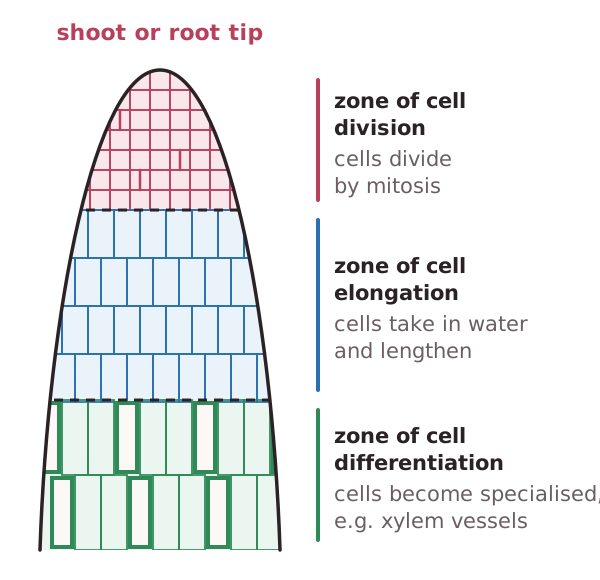
Auxins (e.g. indoleacetic acid - IAA) are made in the tips of roots and shoots and in the meristems which occur just behind the tips of roots and shoots. They diffuse through the cells and flow through transport tissue to the zone of cell elongation.
High concentrations of auxins stimulate the growth of the main (apical) shoot and inhibit the growth of lateral shoots. Auxin molecules bind to specific receptors in the cell membrane causing hydrogen ions to be pumped into the cell wall spaces. The pH falls to about ph5 - the optimum pH for enzymes that break bonds between adjacent cellulose microfibrils. The cells absorb water by osmosis and the microfibrils slide past each other stretching the walls.
Low concentrations of auxins promote root growth and high concentrations inhibit root growth.