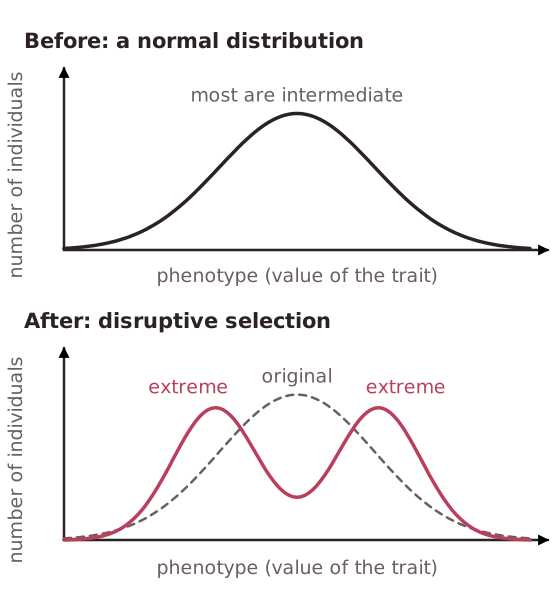
New species can be formed through the process of natural selection and evolution. A species is defined as organisms that can interbreed and form fertile offspring.For new species to be formed you need reproductive isolation i.e. the inability to breed with other populations. As a result there is no gene flow between the reproductively isolated population and other populations.Over time, the accumulation of random mutations lead to major changes in the phenotypes and the population is no longer able to interbreed with other populations. Reproductive barriers mean that the population becomes reproductively isolated and a different species.