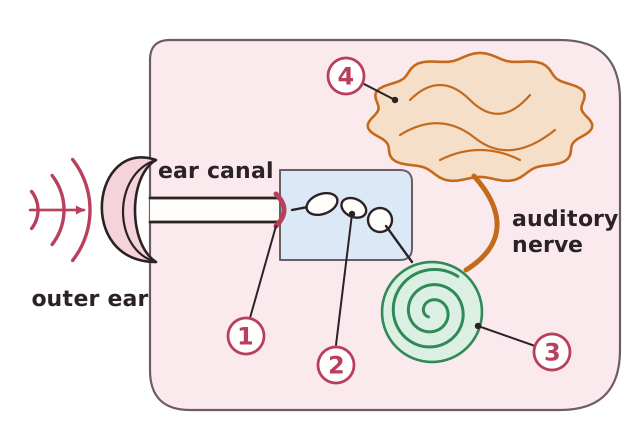
A sound wave in air is a series of vibrations of the air. Some devices and parts of the body convert these wave disturbances into vibrations in a solid, and some do the reverse. The human ear is the main example.
Sound waves travel down the ear canal and make the eardrum, a thin flexible membrane, vibrate. The vibrations are passed on through three small bones called the ossicles, which carry them to the cochlea. The cochlea turns the vibrations into electrical signals, which travel along the auditory nerve to the brain.
Other devices do the same job. In a microphone, sound waves in air make a thin solid diaphragm vibrate, and the vibrations are turned into an electrical signal. A loudspeaker works the other way round: a solid cone vibrates and makes the air around it vibrate, which produces sound waves. In a demonstration, a signal generator connected to a loudspeaker can be used to produce sound of a chosen frequency.