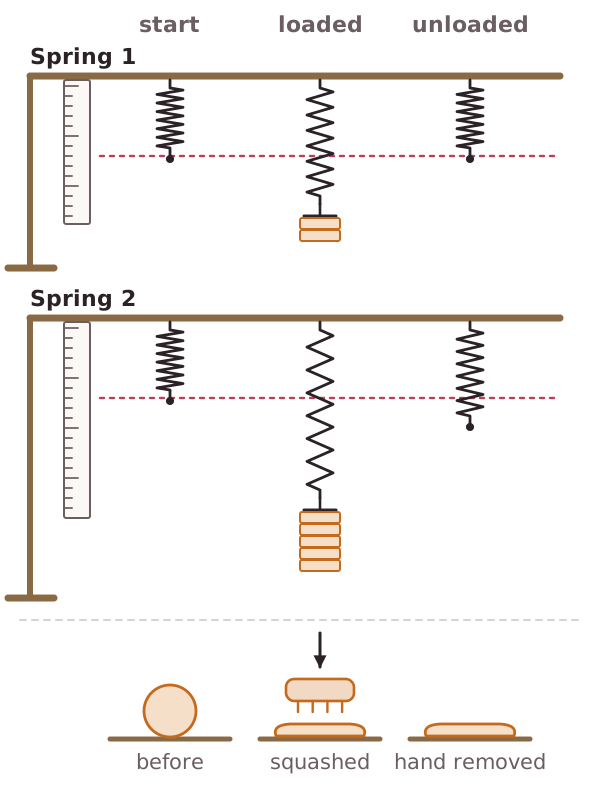
When forces stretch, compress or bend an object, the object is deformed. If the object goes back to its original shape and size when the forces are removed, the deformation is elastic. A spring that is pulled gently and then released is a good example, because it returns to its original length.
If the forces are large enough, the object does not return to its original shape. It stays permanently stretched, bent or squashed. This is plastic deformation. The point where the behaviour changes from elastic to plastic is the elastic limit. A spring pulled beyond its elastic limit stays longer than it was before, and a ball of plasticine squashed flat stays flat. For example, a spring that is 10 cm long at the start but 12 cm long after unloading has been permanently stretched by 2 cm.
You can test this by loading a spring or an elastic band with weights one at a time, then removing them and measuring the length. If the length after unloading is the same as the original length, the elastic limit has not been passed. If the length is greater than the original length, it has.