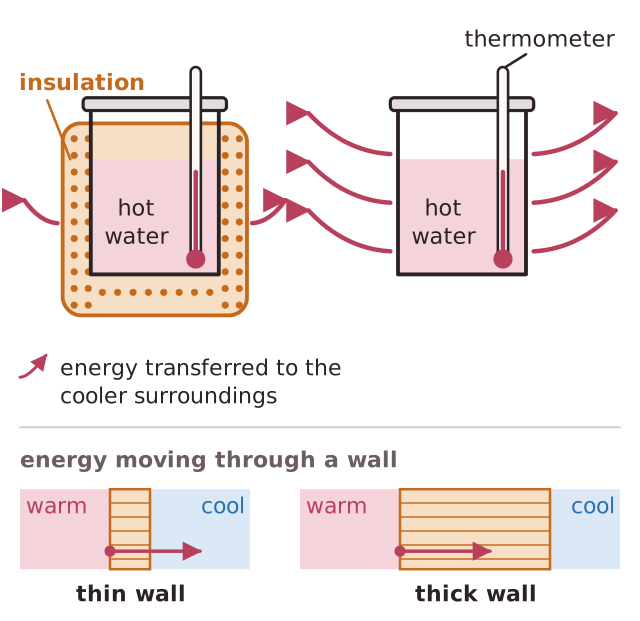
A warm building loses energy to the cooler air outside. This energy is transferred by conduction through the walls, windows and roof, and the building cools down. The rate of cooling is how quickly its temperature falls. A higher rate of cooling means more energy is being transferred to the surroundings each second, so more heating is needed to keep the building warm.
The thickness of the walls matters. Energy has further to travel through a thick wall than through a thin wall, so the rate of energy transfer is lower. The thicker the walls, the lower the rate of cooling.
The material matters too. A material with a high thermal conductivity transfers energy quickly, so walls made of it let the building cool faster. A material with a low thermal conductivity is a good insulator and slows the cooling down. The lower the thermal conductivity, the lower the rate of cooling.
The best way to keep a building warm is therefore thick walls made from a material with low thermal conductivity. This can be investigated by filling insulated and non-insulated cans with hot water and comparing how quickly the temperature falls. Only qualitative statements are needed here, so you should say that the rate of cooling is higher or lower, not calculate it.