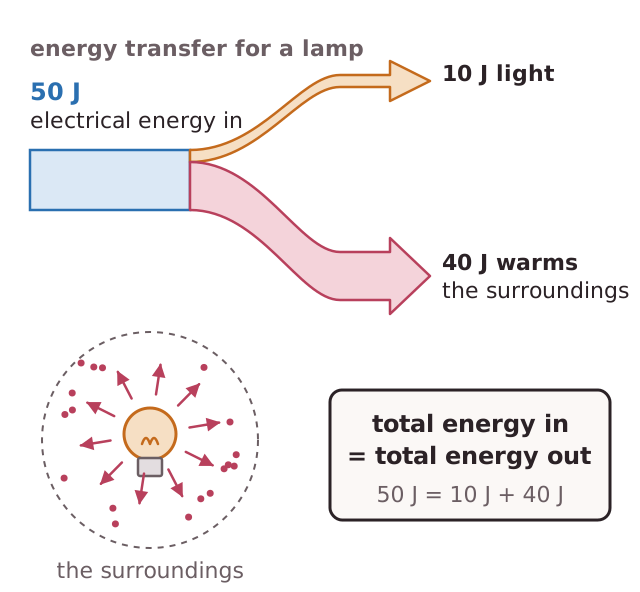
Energy is never created or destroyed. In every transfer the total amount of energy stays the same, so we say that energy is conserved. What changes is where the energy is stored. Some of it ends up in the store we wanted, which is the useful energy. The rest is waste energy.
Waste energy is usually transferred to the thermal store of the surroundings, making them very slightly warmer. The energy spreads out and cannot easily be gathered together and used again, so it is stored in a less useful way. This is called energy being dissipated.
Examples are everywhere. A lamp takes in 50 J of electrical energy and gives out 10 J as light, so 40 J is dissipated as thermal energy. A motor takes in 600 J and lifts a load, but 150 J is dissipated because of friction and the heating of its wires, so 450 J is useful. When a cyclist brakes, friction between the brake pad and the wheel transfers kinetic energy to thermal energy, which is dissipated into the surroundings.