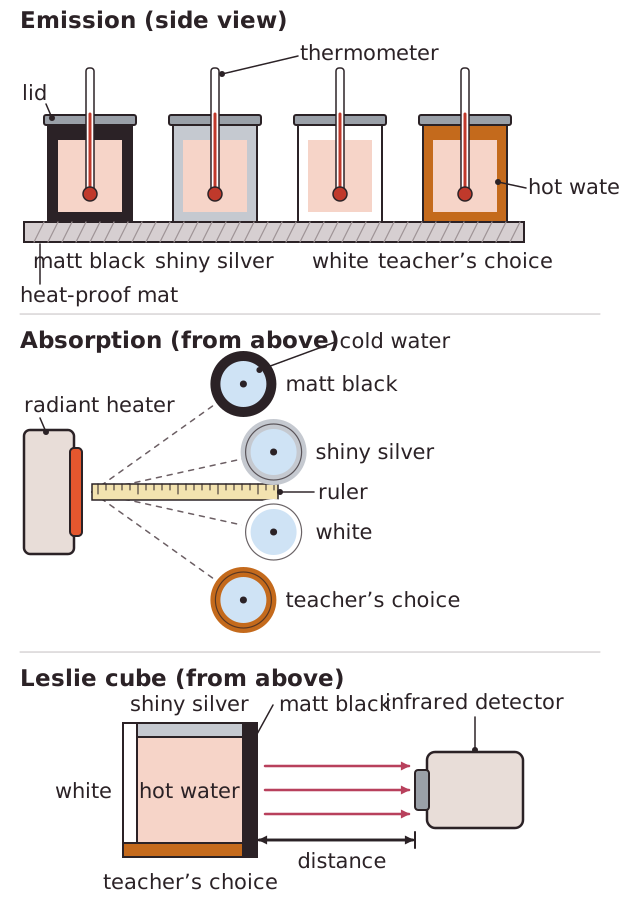
Every object gives out infrared radiation, and every object absorbs it from its surroundings. How quickly this happens depends on the temperature, and also on the nature of the surface. This core practical compares matt black, shiny silver and white surfaces to see which are the best and worst at emitting and absorbing thermal energy.
Emission. Use identical metal cans, each covered with a different surface. Fill each with the same volume of hot water at the same starting temperature, add a lid and a thermometer, and place them the same distance apart on a heat-proof mat. Record the temperature of each can every minute for ten minutes. Plot temperature against time. The can that falls fastest is emitting thermal energy fastest. A Leslie cube does the same job with one hot cube: each face has a different surface, and an infrared detector held at the same distance from each face gives a higher reading for a better emitter.
Absorption. Fill identical cans, each with a different surface, with the same volume of cold water. Place each the same distance from the same radiant heater and switch it on for the same time. The can whose temperature rises most has absorbed the most thermal energy.
The independent variable is the type of surface. The dependent variable is the temperature change or the detector reading. The control variables are the volume of water, the starting temperature, the distance, the size and material of the can, the lid and the time. Matt black surfaces are the best emitters and the best absorbers, so a black can cools faster and also warms faster. Shiny silver surfaces are the worst emitters and the worst absorbers because they reflect most radiation, so a silver can cools slower and warms slower. Example: two cans start at 80 °C. After ten minutes the black can reads 52 °C and the silver can reads 66 °C, so the black can fell by 28 °C, which is more than the 14 °C fall of the silver can. In the absorption test the black can shows the biggest temperature rise. Take care with hot water and hot heaters.