Where there are junctions, the current splits at circuit junctions, but the total current will be the same in order to conserve charge.At a junction, electrons can either go through one branch or the other. The proportions of electrons that travel through each branch depend on the resistance of each branch and are inversely proportional.Fewer electrons go through the higher resistance branch.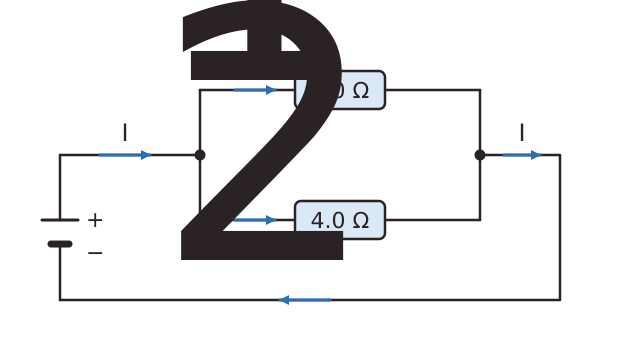 On emerging from the branches, the electrons join together again so the sum of all the currents from the branches must add up to the sum of the currents going into the branches.