 BRAINCAKE
Oscillations
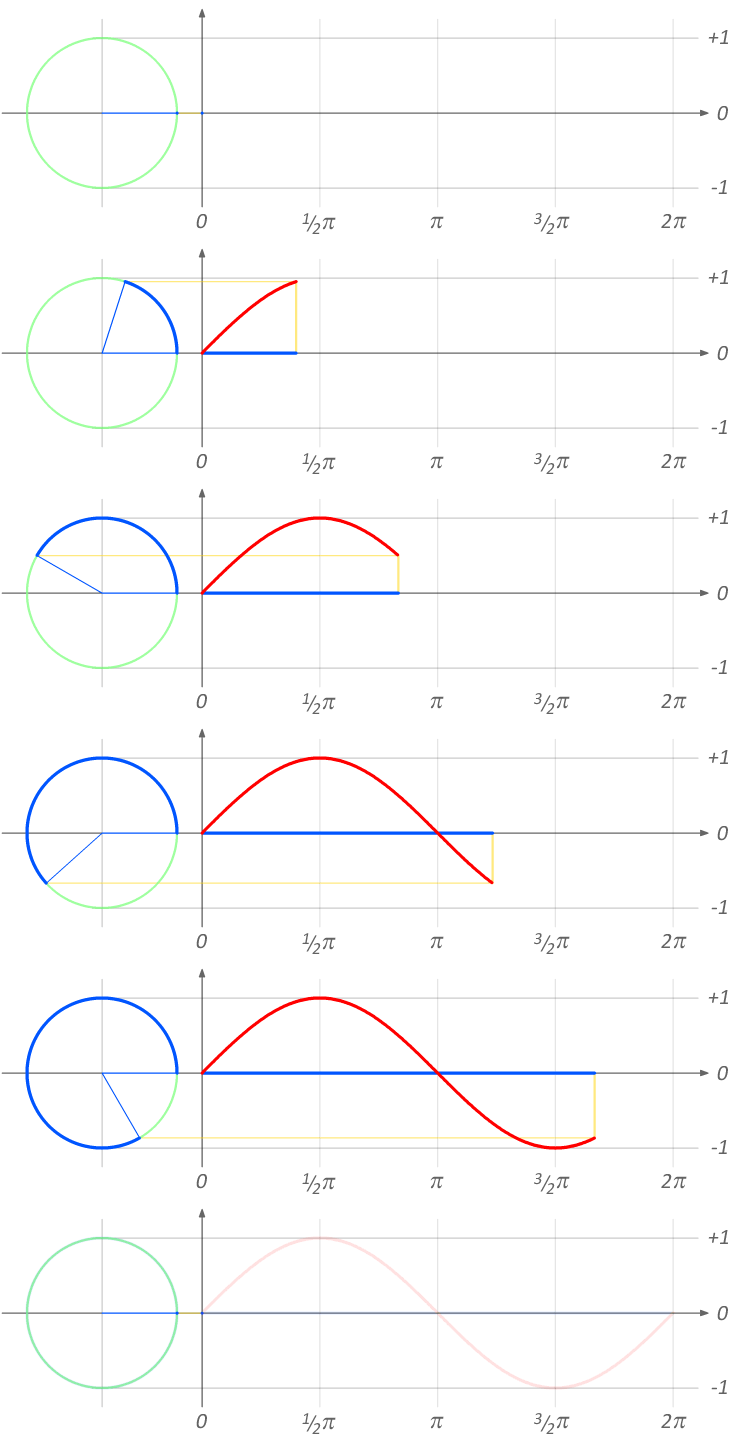
An oscillating object moves repeatedly one way and then in the opposite direction through its equilibrium position.
The displacement of the object decreases as it approaches the equilibrium position then reverses and increases as it moves away from the equilibrium position.
The amplitude is the maximum displacement. If the amplitude is constant and there are no frictional forces present, the oscillations are free oscillations.
Sign in free to see the rest of this lesson, the R.E.C.I.P.E. recall steps and the quiz
BrainCake is free. Make an account in seconds and pick up where this page stops.
More in Simple Harmonic Motion
- Phase Difference
- Simple Harmonic Motion
- Simple Harmonic Motion
- Mass-Spring System
- A Simple Pendulum
- Energy and Simple Harmonic Motion
- Damping
- Resonance
All 9 lessons in Simple Harmonic Motion · All AQA A-level Physics topics