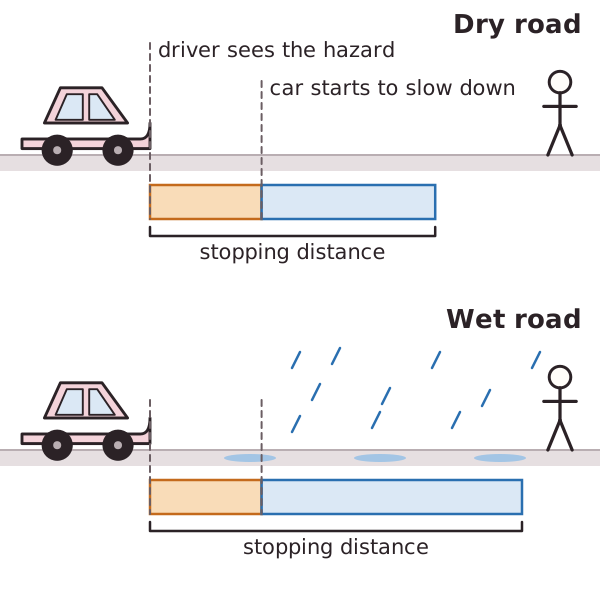
When a driver sees a hazard, the car does not stop at once. The stopping distance is the thinking distance plus the braking distance. At 30 mph (about 13 m/s) a typical car has a thinking distance of about 9 m and a braking distance of about 14 m, so a stopping distance of about 23 m.
The thinking distance is how far the car travels during the driver's reaction time. It increases if the speed is higher, or if the driver's reaction time is longer. Tiredness, alcohol, drugs and distractions such as a mobile phone make reaction time longer. They do not change the braking distance.
The braking distance is how far the car travels once the brakes are applied. It increases with higher speed and with a heavier load. It also increases if the brakes or tyres are worn, or if the road is wet, icy or covered in loose gravel, because there is less friction between the tyres and the road. At higher speed the braking distance increases much more than the thinking distance does.
This is why speed limits matter and why drivers should leave bigger gaps in bad weather and never drive when tired or after drinking.