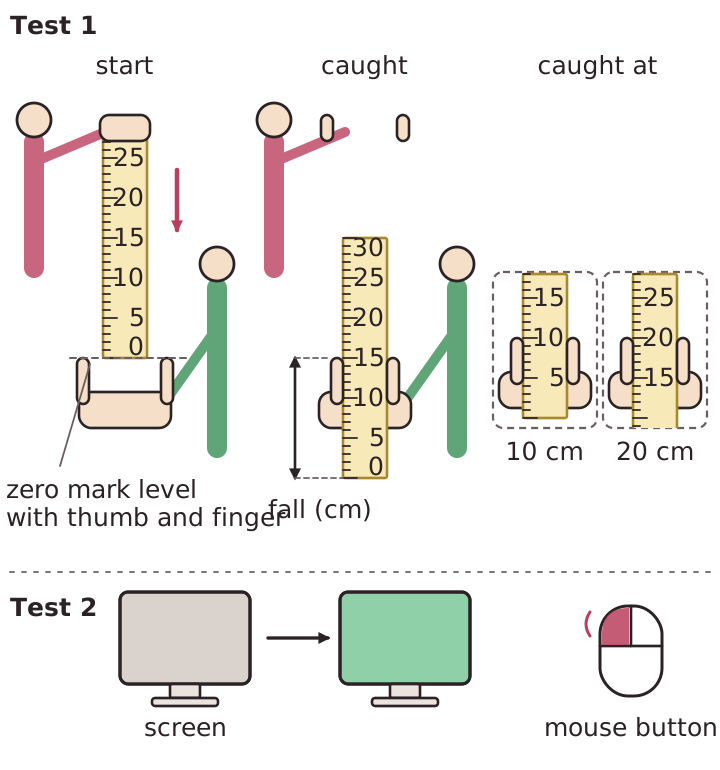
Your reaction time is the time between a stimulus, such as seeing something, and your body responding. For most people it is about 0.2 to 0.9 seconds (0.2 s to 0.9 s). An alert young person often scores between 0.2 s and 0.3 s.
One simple method is the ruler drop test. One person holds a ruler vertically, with the zero level with the thumb and finger of a partner. The ruler is dropped without warning and the partner catches it as quickly as possible. The distance the ruler fell is measured. The further it falls, the longer the reaction time. A table or calculation then converts the distance into a time.
A computer test is another method. The screen changes and the person must click a button as fast as possible, and the computer times the response. This removes human error in starting and stopping a stopwatch.
To get reliable results, repeat the test several times and calculate the mean. Control the other variables: use the same hand, the same starting position and the same level of distraction. Tiredness, alcohol, drugs and distractions can all make reaction times longer.