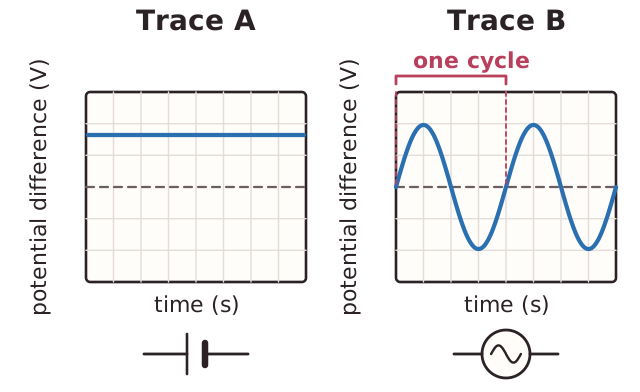
A direct voltage is one where the potential difference keeps the same polarity, so the current is pushed in only one direction around the circuit. A cell or battery gives a direct voltage. Direct current is shortened to d.c.
An alternating voltage is one where the potential difference keeps reversing. The current is pushed one way, then the other way, over and over again. Alternating current is shortened to a.c. The mains supply in the UK is a.c. at 50 Hz, which means it completes 50 full cycles every second.
In a practical you can use a data logger to record the output of a d.c. supply and an a.c. supply and compare the traces. The d.c. trace is a flat horizontal line, because the voltage stays at one steady value. The a.c. trace is a repeating wave that rises above zero, falls below zero and rises again. The parts below zero show that the polarity has reversed.