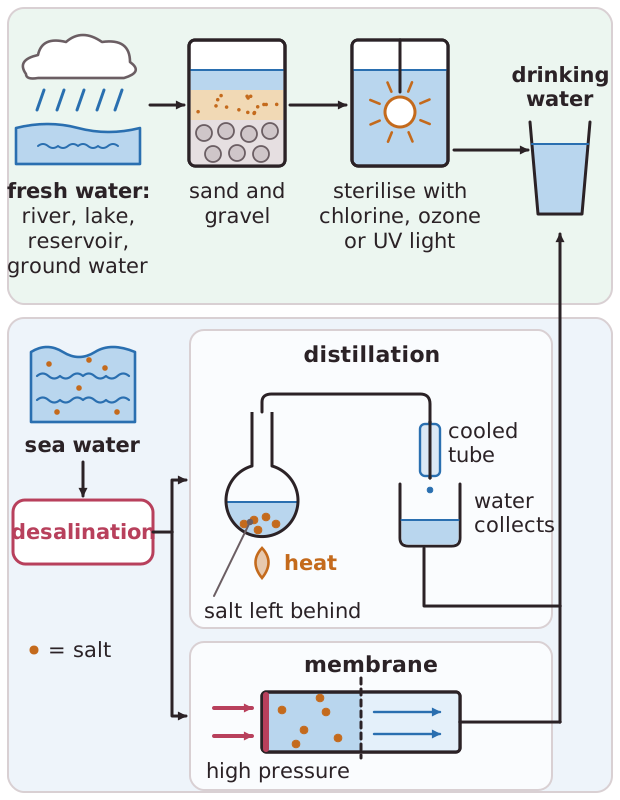
Potable water is water that is safe to drink. It is not the same as pure water, because it can still contain some dissolved substances as long as they are at safe levels. Rain fills rivers, lakes and reservoirs with fresh water, and some soaks into the ground as ground water. These fresh sources contain little dissolved salt, so they are the easiest to make potable.
Fresh water is treated in two main steps. First it is passed through filter beds of sand and gravel, which remove solid particles. Then it is sterilised using chlorine, ozone or ultraviolet light, which kills microbes.
Waste water, such as sewage and water from industry, holds far more contaminants, so it needs more stages before it is safe. Solids are screened out and left to settle, and microbes are used to break down the remaining waste. Salt water, such as seawater, is harder still. Its dissolved salts pass straight through a filter bed, so the salt has to be separated out by desalination.
Desalination uses distillation or reverse osmosis. In distillation the salt water is boiled, the steam is condensed, and the salt is left behind. In reverse osmosis, high pressure forces the water through a membrane that holds back the salt. Both methods use a lot of energy, so they are expensive and are mainly used where fresh water is scarce.