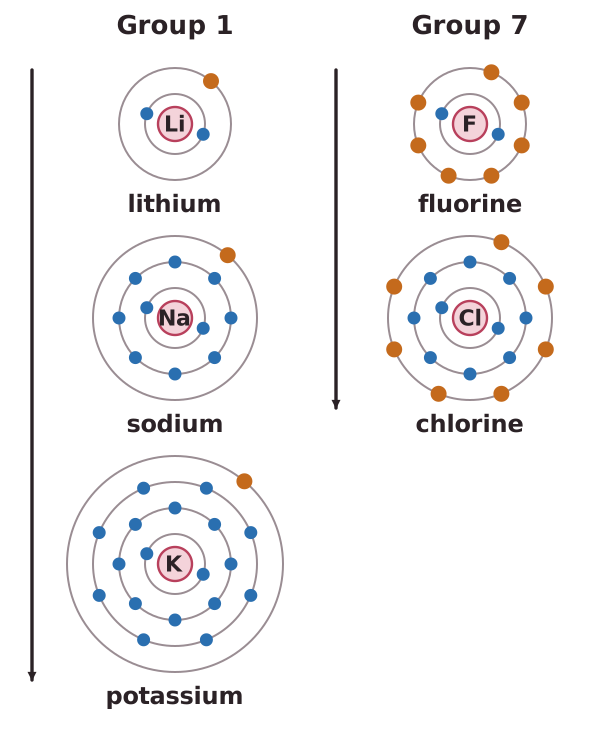
The chemical reactions of an element depend on the arrangement of the electrons in its atoms. Electrons sit in energy levels, also called shells. The first shell holds up to 2 electrons and the second and third hold up to 8 each. The electrons in the highest energy level are the outer shell electrons, and these are the ones involved in reactions. The atomic number is the number of protons in an atom. In a neutral atom it equals the number of electrons, so the atomic number decides the arrangement of the electrons. Sodium has atomic number 11, so its electron arrangement is 2.8.1.
Atoms react to get a full outer shell, which is a stable arrangement. The noble gases already have a full outer shell, so they are unreactive. Atoms with only a few outer electrons, such as sodium, tend to lose them and form positive ions. Atoms with nearly full outer shells, such as chlorine with seven outer electrons, tend to gain one electron and form a negative ion, or they share electrons.
Atoms of elements in the same group have the same number of outer shell electrons, so they react in a similar way. Lithium, sodium and potassium in Group 1 each have one outer electron, which they lose in reactions. The nucleus does not change when electrons are lost, gained or shared, only the electron arrangement does. Down Group 1 the outer electron is further from the nucleus and held less strongly, so it is lost more easily and the elements get more reactive.