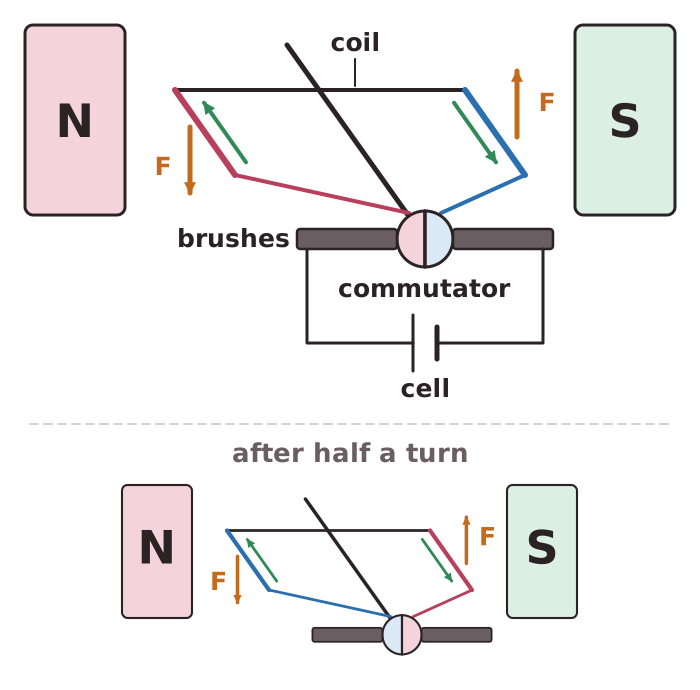
An electric motor uses the force on a current-carrying wire in a magnetic field to make a coil rotate. In the simplest motor, a rectangular coil of wire sits between the north and south poles of a magnet and is connected to a direct current supply.
The current flows in opposite directions along the two opposite sides of the coil. Using Fleming's left-hand rule, the forces on these two sides also act in opposite directions: one side is pushed up and the other is pushed down. Together the two forces give a turning effect, so the coil rotates.
If the current always flowed the same way, the coil would stop turning after half a turn. A commutator reverses the current every half turn, so the forces keep pushing the coil round the same way. A larger current, a stronger magnet or more turns of wire gives a larger force, so the motor turns faster.