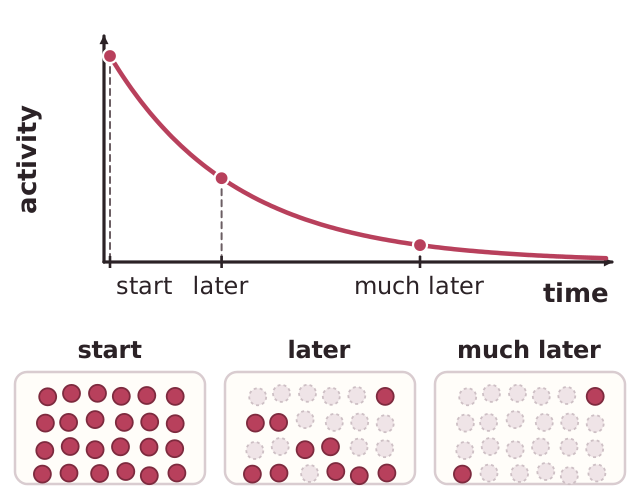
The activity of a radioactive source is the number of nuclei that decay each second. A source contains a very large number of unstable nuclei, and each decay uses one of them up.
As time goes on there are fewer unstable nuclei left, so fewer decays happen each second. This means the activity of the source decreases over time. It never jumps suddenly to zero.
The fall is not steady. At the start there are many unstable nuclei, so the activity is high and falls quickly. Later there are fewer unstable nuclei left, so the activity falls more slowly. A graph of activity against time is therefore a curve that starts steep and gets shallower. Because the decay of each nucleus is random, this pattern only shows up clearly for a large number of nuclei. The activity falls faster at the start than later.