A potential difference (voltage) pushes charge round a circuit. It can do this in two different ways.
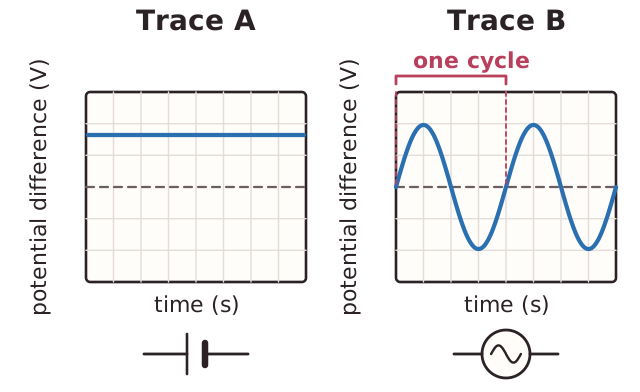
A direct voltage always pushes charge the same way round the circuit. One terminal is always positive and the other is always negative. A cell or battery gives a direct voltage.
An alternating voltage reverses direction again and again. The terminals keep swapping between positive and negative, so the charge is pushed one way and then the other. The mains gives an alternating voltage.
You can see the difference on a graph of voltage against time. A direct voltage is a straight horizontal line, because the voltage stays the same direction and does not cross zero. An alternating voltage is a wave that goes above zero and below zero repeatedly. When the graph is below zero, the voltage is acting in the opposite direction.