A person's reaction time is the time between seeing or hearing a signal and responding to it. For a fit, alert person it is typically about 0.2 s, and values up to about 0.9 s are possible depending on the person and the situation.
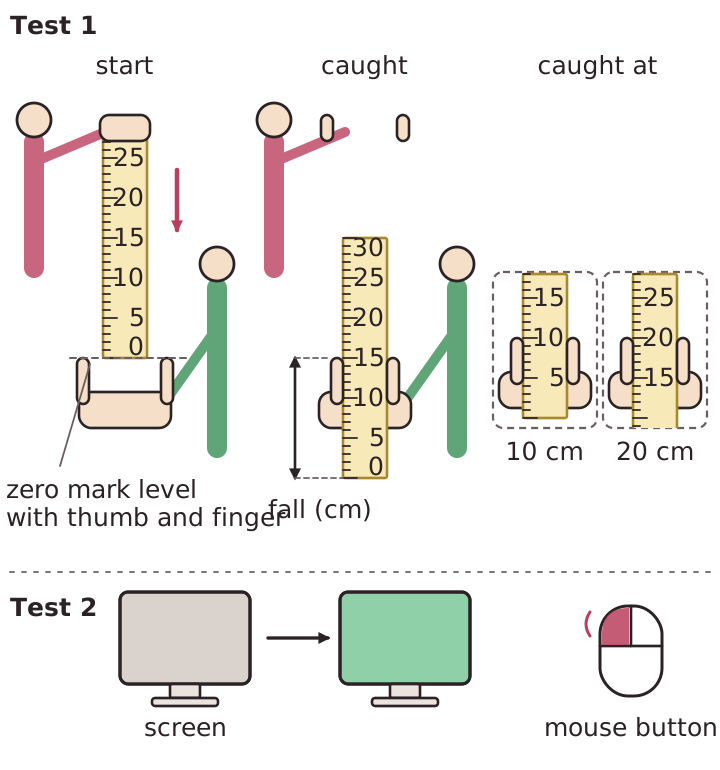
In the ruler drop test, one person holds a ruler vertically with its zero mark level with the top of another person's open thumb and finger. The first person drops the ruler without warning and the second person catches it as fast as they can. The distance the ruler fell is read from the scale and converted to a time using a table or calculation. A shorter fall means a quicker reaction. The further the ruler falls, the longer the reaction time.
A computer test is an alternative. The screen changes colour at a random moment and the person clicks as soon as they see it, and the computer times the gap electronically. This avoids the human error of starting a stopwatch. To make either method reliable, repeat the test several times and calculate a mean. Use the same hand each time, keep the start position the same and give no warning before the drop.