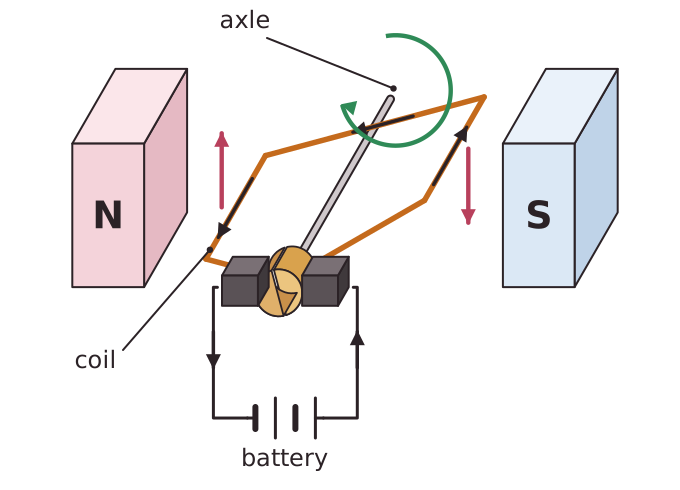
A coil of wire carrying a current in a magnetic field tends to rotate. This is the basis of an electric motor. The coil sits between the poles of a magnet.
The two long sides of the coil carry current in opposite directions. By Fleming's left-hand rule, the force on one side is upwards and the force on the other side is downwards. These two forces form a turning effect, so the coil rotates.
A split-ring commutator is joined to the coil, and carbon brushes press against it to connect the coil to the power supply. Every half turn the commutator reverses the current in the coil. This reverses the forces just in time, so the coil keeps turning in the same direction instead of stopping. The motor spins faster with a bigger current or a stronger magnet, and reversing either the current or the field reverses the direction of rotation, for example from clockwise to anticlockwise.