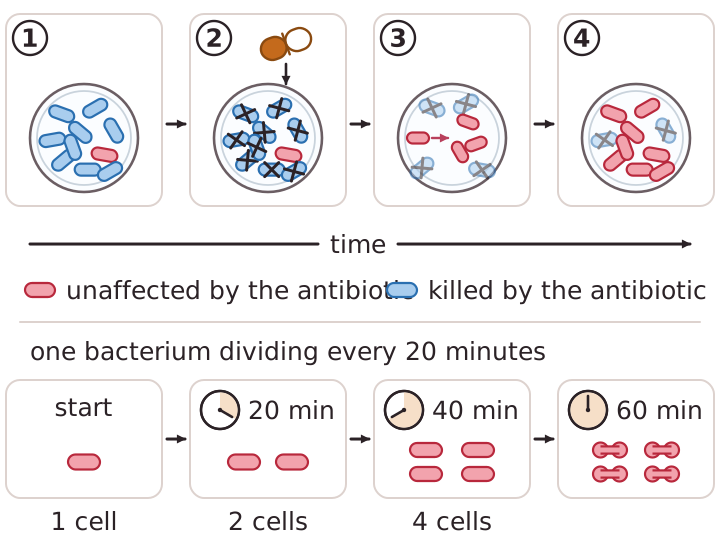
Bacteria can evolve rapidly because they reproduce at a fast rate. Mutations of bacterial pathogens produce new strains. Some strains might be resistant to antibiotics, so they are not killed. They survive and reproduce, and the population of the resistant strain rises.
The resistant strain then spreads because people are not immune to it and there is no effective treatment. MRSA is an example of a bacterium that is resistant to antibiotics.
To reduce the rate at which resistant strains develop:
- doctors should not prescribe antibiotics inappropriately, such as for non-serious infections or viral infections
- patients should complete their course of antibiotics, so all the bacteria are killed and none survive to mutate and form resistant strains
- the agricultural use of antibiotics should be restricted.
The development of new antibiotics is costly and slow. It is unlikely to keep up with the emergence of new resistant strains.