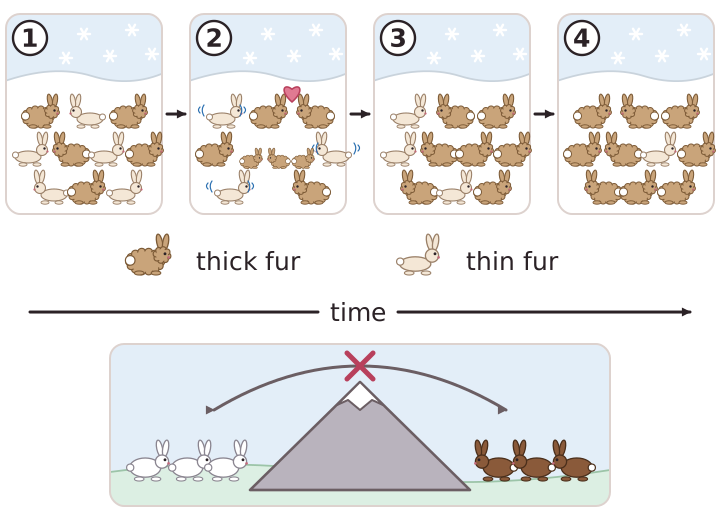
Evolution is a change in the inherited characteristics of a population over time, through a process of natural selection. It may result in the formation of a new species. The theory of evolution by natural selection states that all species of living things have evolved from simple life forms that first developed more than three billion years ago.
Natural selection works on the variation within a population. Individuals vary because of mutations, and some variants have phenotypes that are best suited to their environment. These individuals are more likely to survive and breed successfully, so they pass on the genes for their useful characteristics to the next generation. Over many generations the characteristic becomes more common in the population. For example, in a cold climate, rabbits with thick fur are more likely to survive and breed than rabbits with thin fur.
Sometimes two populations of one species become so different in phenotype that they can no longer interbreed to produce fertile offspring. When this happens they have formed two new species.