During puberty, reproductive hormones cause the secondary sex characteristics to develop. In a woman the main reproductive hormone is oestrogen, which is produced in the ovary. At puberty eggs begin to mature, and about every 28 days one egg is released. This is called ovulation. In a man the main reproductive hormone is testosterone. It is produced by the testes and it stimulates sperm production.
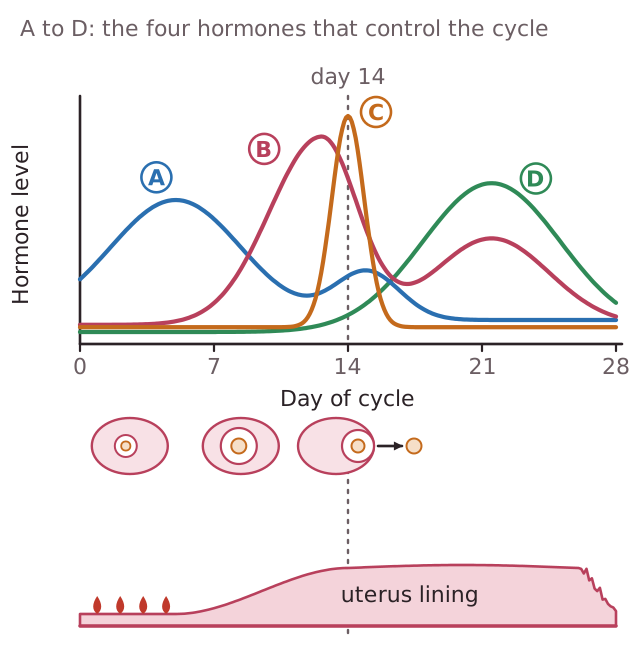
Several hormones control the menstrual cycle. Follicle stimulating hormone (FSH) causes an egg to mature in the ovary. Luteinising hormone (LH) stimulates the release of the egg. Oestrogen and progesterone help to maintain the lining of the uterus.
Higher tier only: the hormones work together. FSH, released by the pituitary gland, stimulates the ovary to produce oestrogen. As oestrogen builds up, it stimulates the pituitary gland to release LH, which triggers ovulation. After ovulation, progesterone is made and keeps the uterus lining thick. Oestrogen and progesterone also inhibit FSH. If there is no pregnancy, the progesterone level falls and the lining breaks down.
Graphs of hormone levels show this pattern. The oestrogen level peaks before the LH level, and the progesterone level is highest after ovulation.