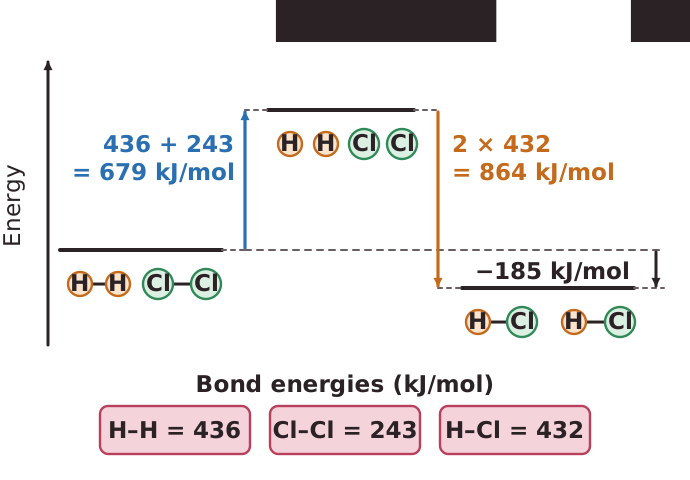
In every chemical reaction the bonds in the reactants must be broken, and new bonds form in the products. Energy must be supplied to break bonds, so breaking bonds is endothermic. Energy is released when bonds form, so making bonds is exothermic. The energy for each bond is given as a bond energy, in kJ/mol, and in the exam these values are supplied.
The overall energy change is the difference between the two totals:
energy change = energy needed to break bonds − energy released when bonds form
If the energy released forming new bonds is greater than the energy needed to break the old bonds, the reaction is exothermic and the overall energy change is negative. If the energy needed to break bonds is greater than the energy released, the reaction is endothermic and the overall energy change is positive.
Example: H2 + Cl2 → 2HCl. Bond energies: H–H 436, Cl–Cl 243, H–Cl 432 kJ/mol. Breaking bonds needs 436 + 243 = 679 kJ/mol. Forming two H–Cl bonds releases 2 × 432 = 864 kJ/mol. The overall energy change is 679 − 864 = −185 kJ/mol, so the reaction is exothermic.