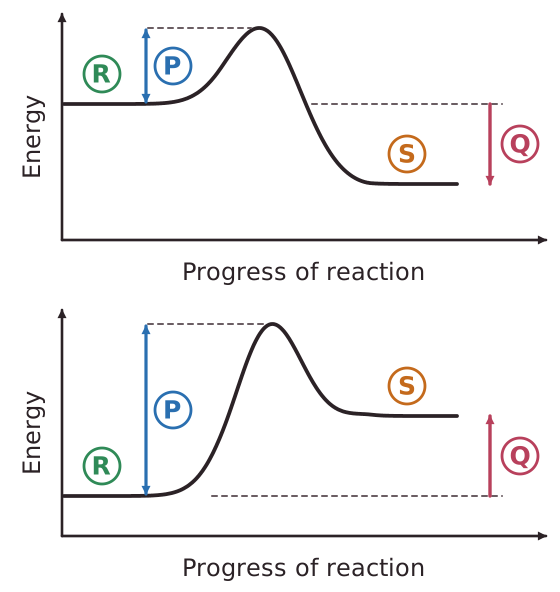
Particles must collide before they can react. Most collisions do not lead to a reaction. A reaction only happens if the colliding particles have enough energy to break some of the bonds in the reactants.
The minimum energy that colliding particles need for a reaction to happen is called the activation energy. If the particles have less energy than this, they bounce apart and no reaction takes place.
On a reaction profile, the activation energy is the height from the energy of the reactants up to the top of the peak. It is needed for both exothermic and endothermic reactions.
This explains why a candle does not burn until it is lit. The flame supplies the energy to reach the activation energy. Once the reaction starts, the energy it transfers to the surroundings keeps the reaction going. This also shows why a reaction can be exothermic even though it needs energy to start.