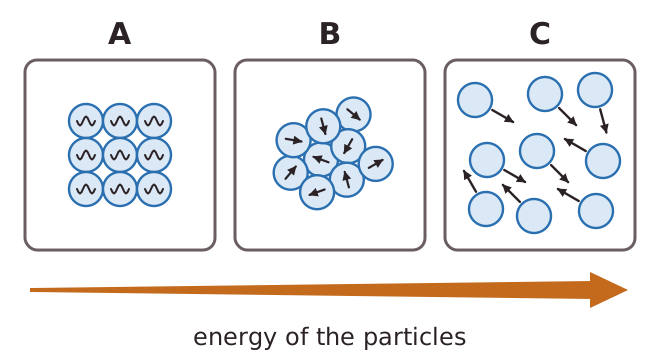
Matter exists in three states: solid, liquid and gas. The difference between them is how the particles are arranged, how they move and how much energy they have.
In a solid, the particles are packed close together in a regular arrangement and held in fixed positions. They cannot move from place to place, but they vibrate about their fixed positions. Solids have the least energy of the three states.
In a liquid, the particles are still close together and touching, but they are in an irregular arrangement. They have more energy than in a solid, so they can move around and slide over each other. This is why a liquid can flow.
In a gas, the particles are far apart and arranged randomly. They have the most energy, so they move quickly in random directions and spread out to fill their container.