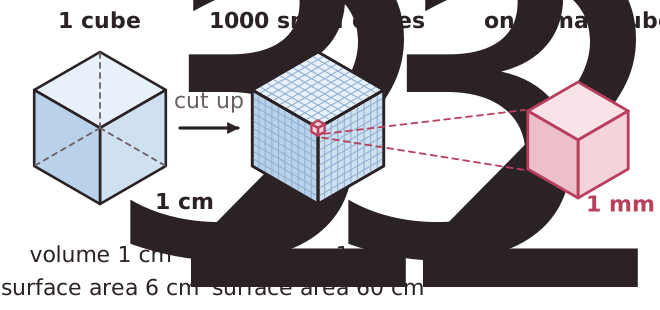
The main reason nanoparticles behave differently from the same material in bulk is their very large surface area to volume ratio. Imagine a cube of side 1 cm cut into 1000 smaller cubes of side 1 mm. The total volume is unchanged, but the total surface area rises from 6 cm2 to 60 cm2. For a cube the ratio is 6 divided by the side length, so making the side 10 times smaller makes the ratio 10 times bigger. The ratio increases as particles shrink.
With a large surface area to volume ratio, a much higher proportion of the atoms are on the surface where they can react. This makes nanoparticles very effective as catalysts and in sensors. A smaller mass of the material is needed to do the same job, which can save money when the material is expensive.
Sunscreens use nanoparticles of titanium dioxide and zinc oxide. They absorb ultraviolet light, which protects the skin from sunburn. Because the particles are so small they are transparent, so they do not leave a white layer on the skin as larger particles do. They also spread evenly, which gives better coverage. However, it is not fully known whether nanoparticles can enter cells in the body, so some people worry about long-term health effects.