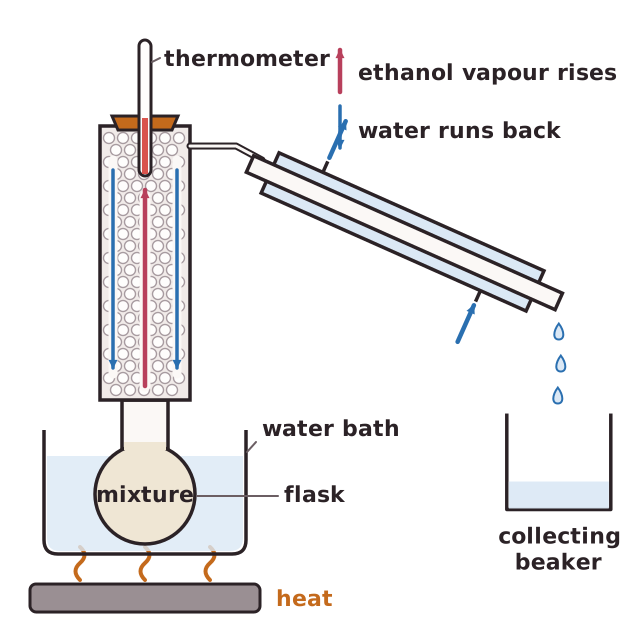
Fermentation only makes a dilute solution of ethanol in water, up to about 15 percent ethanol, because stronger solutions kill the yeast. To get a more concentrated solution, the mixture is separated by fractional distillation. This works because the two liquids have different boiling points. Ethanol boils at about 78 °C and water boils at 100 °C.
The fermentation mixture is heated in a flask, usually in a water bath, because ethanol is flammable and a naked flame is dangerous. The flask has a fractionating column on top, with a thermometer at the top of the column. Ethanol evaporates more easily than water. Its vapour rises up the column. Water vapour condenses in the column and runs back into the flask.
The ethanol vapour reaches the top of the column and passes into a condenser. Cold water flows through the outside of the condenser, entering at the bottom and leaving at the top. The vapour cools, condenses and is collected as a liquid. The thermometer should read about 78 °C while ethanol is coming over. If it rises towards 100 °C then water is starting to come over, and the collection is stopped.