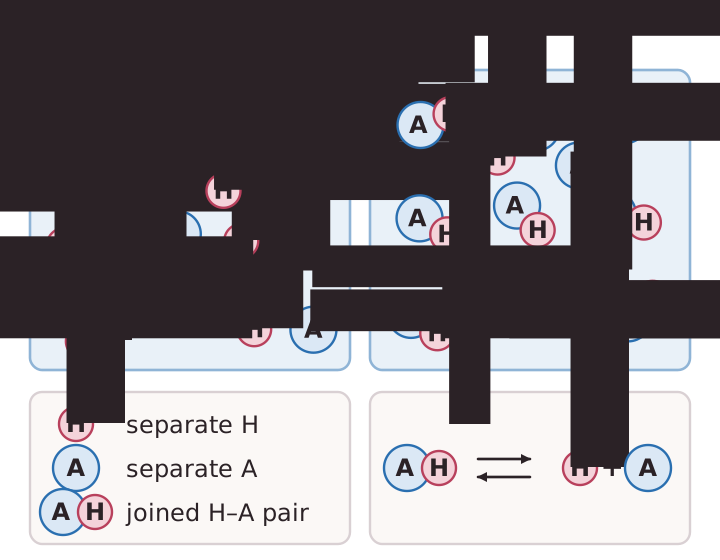
An acid in water produces hydrogen ions, H+. The difference between a strong acid and a weak acid is the degree of dissociation, which means how many of the acid molecules split up into ions.
A strong acid dissociates completely in water, so every molecule splits into ions. Hydrochloric acid, nitric acid and sulfuric acid are strong acids. A weak acid dissociates only partly. Most of its molecules stay as molecules and only a small fraction form ions. The dissociation is reversible. Ethanoic acid and citric acid are weak acids.
Take a strong acid and a weak acid at the same concentration. The strong acid gives a higher concentration of hydrogen ions, so it has a lower pH. Strong and weak describe the degree of dissociation, while dilute and concentrated describe the amount of acid dissolved. A weak acid can be concentrated, and a strong acid can be dilute.