Enthalpy is a measure of the total energy of a chemical system. The enthalpy change of a process is the heat energy that is transferred between the system and its surroundings at constant pressure.The difference in the enthalpy of the reactants and products is called the enthalpy change ΔH.ΔH = Hproducts - HreactantsExothermic processes transfer heat energy from the system to the surroundings. The temperature increases. ΔH is negative.Endothermic processes transfer heat energy from the surroundings to the system. The temperature decreases. ΔH is positive.
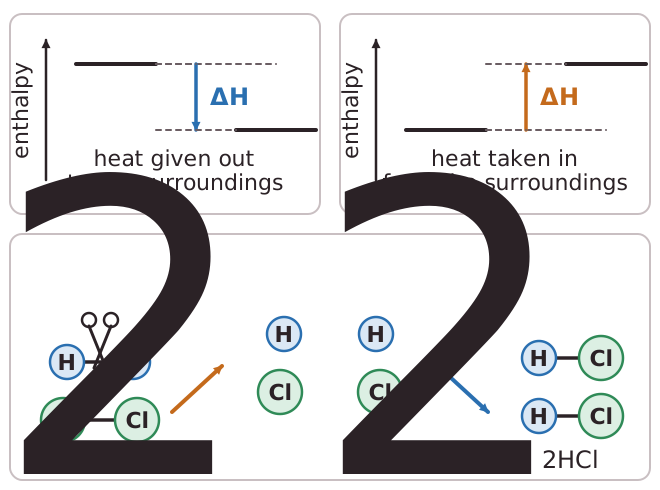
Enthalpy and Enthalpy Changes
Read the text
Read the text and highlight anything you think is important. When you go on, the text is hidden and you answer from memory.
Specification: OCR Chemistry A (H032), AS-level, 3.2.1 Enthalpy changes. Topic: Enthalpy.
Key terms in this lesson
- Exothermic
- Describes a process in which heat energy is transferred from the system to the surroundings, so the enthalpy change is negative.
- Endothermic
- Describes a process in which heat energy is transferred from the surroundings to the system, so the enthalpy change is positive.
More in Enthalpy
- Endothermic and Exothermic Reactions
- Activation Energy
- Standard Enthalpy Changes and Standard Conditions
- Enthalpy Change of Reaction
- Enthalpy Change of Formation
- Enthalpy Change of Combustion
- Enthalpy Change of Neutralisation
- Measuring the Enthalpy Change of Combustion
All 19 lessons in Enthalpy · All OCR AS-level Chemistry topics