Skip to content

The Mass Spectrometer

A mass spectrometer can be used to experimentally measure the percentage abundances of isotopes in a sample of an element.

  • The sample is placed in the mass spectrometer and vaporised
  • The vaporised sample is ionised to form positive ions.
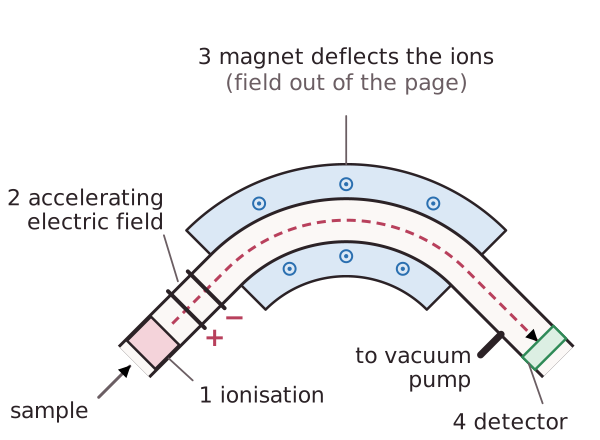
  • The ions are accelerated by an electric field.
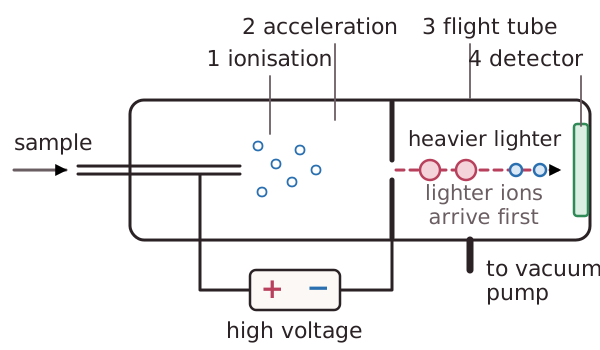
  • The degree of deflection by a magnetic field or the time of flight depends on the mass of the isotope
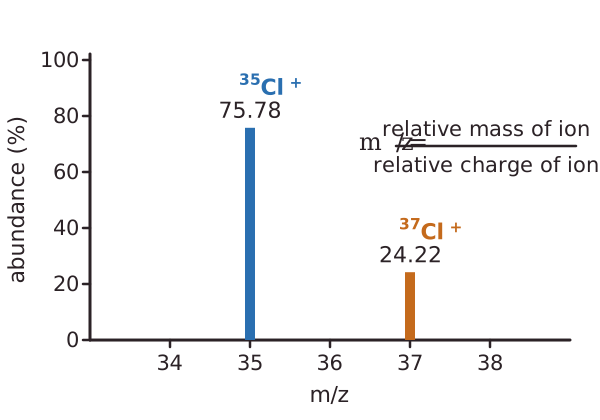
  • A detector detects the ions as a pulse or current. The greater the abundance the larger the signal.
  • The mass-to-charge or m/z ratio of all the signals is output as a mass spectrum.
Read the text

Read the text and highlight anything you think is important. When you go on, the text is hidden and you answer from memory.

Specification: OCR Chemistry A (H032), AS-level, 2.1.1 Atomic structure and isotopes. Topic: Atoms, Ions and Compounds.

Key terms in this lesson

Isotopes
Atoms of the same element with the same number of protons but different numbers of neutrons.
Ion
A positively or negatively charged atom or group of atoms, formed by the loss or gain of electrons.

More in Atoms, Ions and Compounds

All 17 lessons in Atoms, Ions and Compounds · All OCR AS-level Chemistry topics