Magnesium reacts with steam to form magnesium oxide: Mg (s) + H2O (g) → MgO (s) + H2 (g)
The hydrogen is burned as it forms for safety as it is highly flammable.With steam the reaction is much faster than with cold water. Heated magnesium ribbon burns with a bright white flame and a white powder of magnesium oxide is left behind.
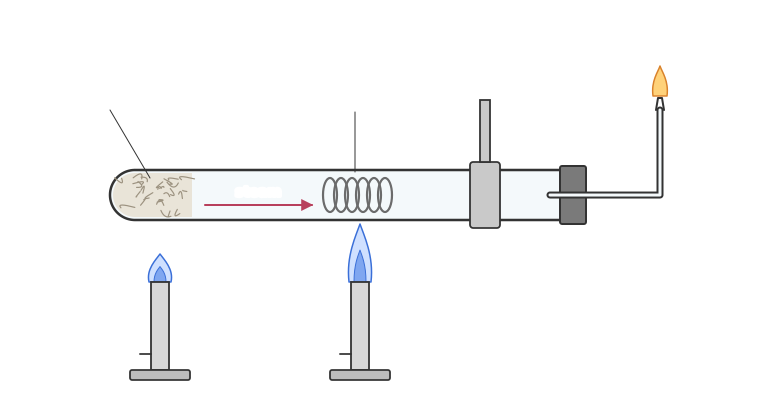
In the laboratory, mineral wool soaked in water is placed at the closed end of a boiling tube and a coil of magnesium ribbon is placed further along. The magnesium is heated strongly, then the wool is warmed so that steam passes over the hot metal. The hydrogen leaves through a delivery tube and is lit at the end of it.Compare this with cold water. Magnesium reacts very slowly with cold water to form magnesium hydroxide, and only a few bubbles of hydrogen are seen. With steam the product is the oxide, because magnesium hydroxide is not stable at such a high temperature.This is a redox reaction. Magnesium is oxidised from 0 to +2, and hydrogen is reduced from +1 in water to 0 in H2. Magnesium is the reducing agent.
The hydrogen is burned as it forms for safety as it is highly flammable.With steam the reaction is much faster than with cold water. Heated magnesium ribbon burns with a bright white flame and a white powder of magnesium oxide is left behind.