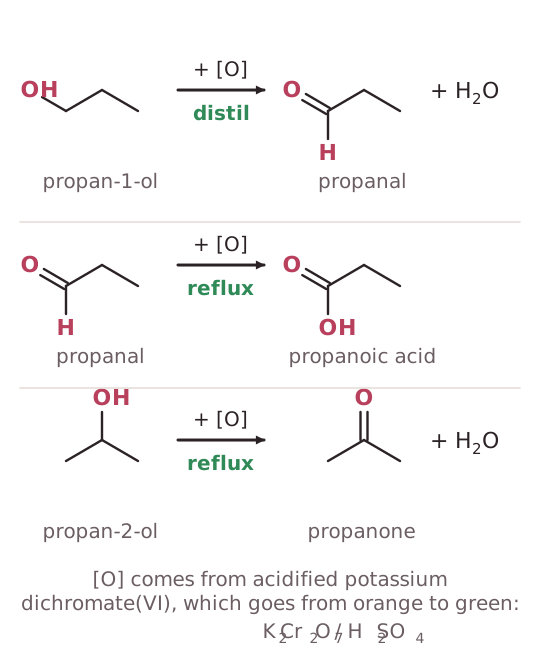
Primary and secondary alcohols can be oxidised using potassium dichromate VI and sulfuric acid (K2Cr2O7/H2SO4).The primary alcohol is oxidised into an aldehyde on gentle heating and water is an additional product. The aldehyde can be distilled out as it formed to prevent further oxidation. Further oxidation of the aldehyde to a carboxylic acid occurs if the mixture is heated under reflux.Secondary alcohols are oxidised to ketones if heated under reflux. Tertiary alcohols will not react.In the reaction the acidified dichromate: H+/Cr2O72- goes from orange to green Cr3+.