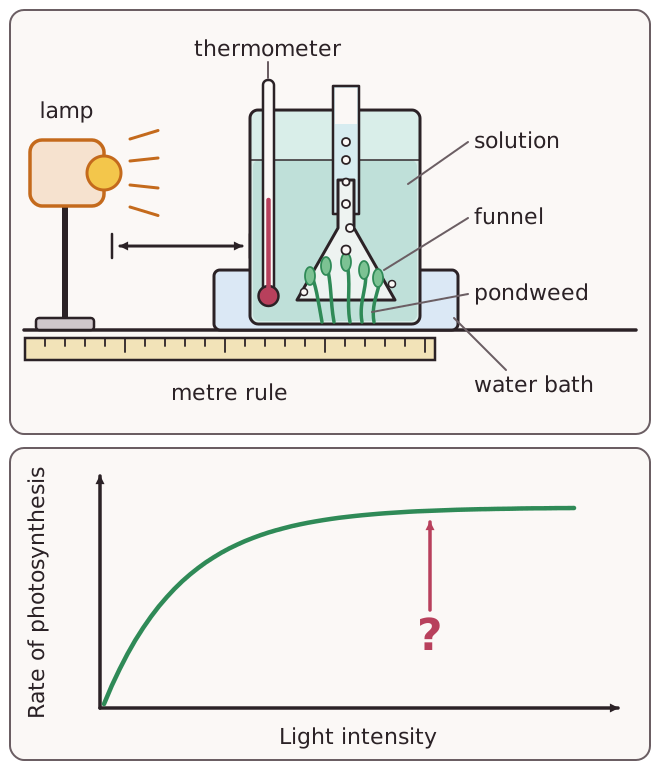
Four factors affect how fast a plant photosynthesises. A higher temperature speeds up the reaction, but at very high temperatures the enzymes are denatured and the rate falls. More light and a higher carbon dioxide concentration both increase the rate. The amount of chlorophyll also matters, because chlorophyll absorbs the light. A leaf with less chlorophyll, such as a damaged or diseased leaf, photosynthesises more slowly.
Any one of these factors can be the limiting factor. This is the factor that is in shortest supply, so it stops the rate rising any further. On a graph, the rate rises as light intensity rises, then levels off. At that point light is no longer limiting, and another factor such as temperature or carbon dioxide concentration is.
Required practical 6 uses an aquatic plant such as pondweed. A lamp is placed at different distances from the pondweed. The closer the lamp, the higher the light intensity, so the rate of photosynthesis rises. The pondweed gives off oxygen as bubbles. You count the number of bubbles per minute, or measure the volume of oxygen collected in a set time. The rate is the amount of oxygen divided by the time. For example, 40 bubbles in 8 minutes is a rate of 5 bubbles per minute. The temperature is kept the same by using a water bath, and sodium hydrogencarbonate is dissolved in the water to supply carbon dioxide.
Higher tier only: light intensity is inversely proportional to the square of the distance from the lamp, which is the inverse square law. Doubling the distance makes the intensity one quarter. With two or three factors on a graph, the limiting factor is the one that is lowest. Greenhouse growers add heat, light or carbon dioxide only when the extra crop is worth more than the extra cost.