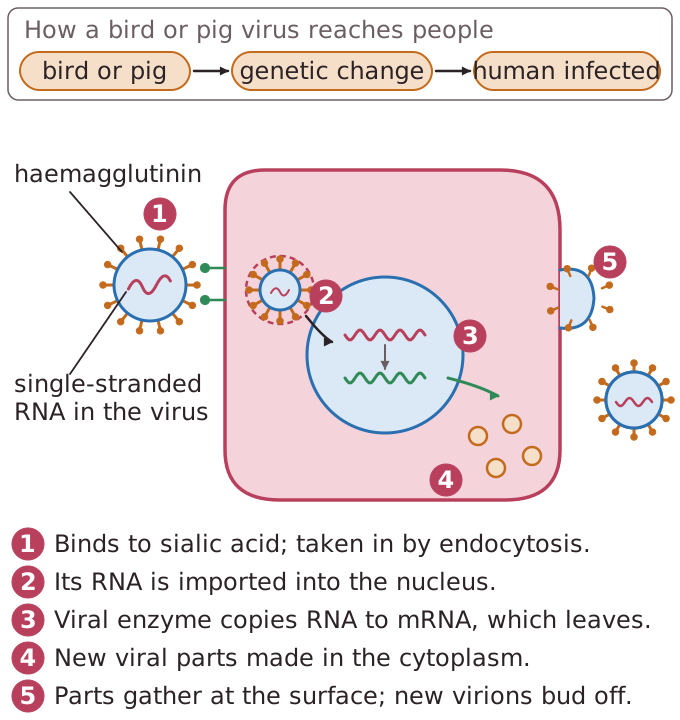
Zoonotic diseases are diseases that can be caught from animals.Influenza is able to attack several animals including birds and pigs.The virus can sometimes jump the species barrier by mutation. Humans then are infected with bird flu or swine flu. Few people have natural immunity to these new strains.The virus can be identified by analysing its genetic material (RNA). In 2009, there was a H1N1 pandemic. Around 200,000 to 300,000 died worldwide.The H1N1 Influenza A virus is a single-stranded, negative-sense RNA virus.The virus enters the host cell by receptor mediated endocytosis. The virus specifically targets the epithelial cells of the respiratory tract. The virus uses surface hemagglutinin proteins to bind to sialic acid receptors on the cell surface.The virus is imported into the host cell nucleus. The viral RNA-dependent RNA polymerase transcribes the negative-sense vRNA into positive-sense mRNA exported from the nucleus into the cytoplasmOnce the mRNA is in the cytoplasm, viral structural proteins are synthesised. Viral structural components gather at the host plasma membrane.New H1N1 virions bud off the cell surface.