 BRAINCAKE
Antibodies
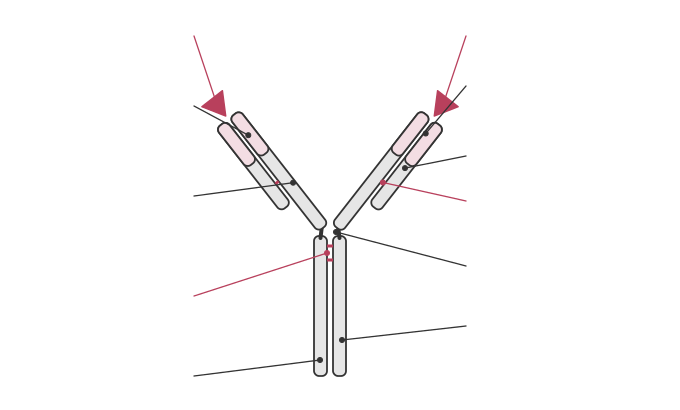
Antibodies are Y shaped glycoproteins called immunoglobulins.
Different antibodies bind specifically to a different antigen on the pathogen or toxin that has triggered the immune response. There are millions of different types of antibody and there is a specific antibody for each antigen.
Antibodies have two long identical polypeptide chains called heavy chains and two short identical polypeptide chains called light chains which are held together by disulfide bridges.
Sign in free to see the rest of this lesson, the R.E.C.I.P.E. recall steps and the quiz
BrainCake is free. Make an account in seconds and pick up where this page stops.
Key terms in this lesson
- disulfide bridge
- A covalent bond formed between two cysteine residues that helps stabilise the tertiary or quaternary structure of a protein.
- tertiary structure
- The overall three-dimensional shape of a single polypeptide chain, formed and held by bonds between R groups.
- glycoprotein
- A protein with a carbohydrate chain attached, often found on the cell surface acting as a receptor or antigen.
- pathogen
- A microorganism that causes disease.
- antigen
- A molecule, usually a protein, on the surface of a cell or pathogen that triggers an immune response.
More in Communicable Diseases
- Phagocytosis
- Counting Blood Cells
- Cytokines
- Opsonins
- How Antibodies Work
- Lymphocytes
- Cell-Mediated Immunity
- Humoral Immunity
All 40 lessons in Communicable Diseases · All OCR AS-level Biology topics