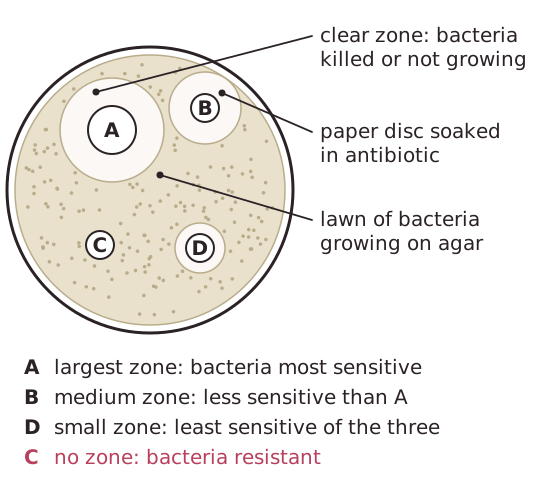
Antibiotics work by interfering with the metabolism of bacteria and some fungi. They do not interfere with the functions of human cells.Penicillin is used in many bacterial infections caused by staphylococci and streptococci.Many types of bacteria have developed resistance following extensive use.The development of resistant populations of antibiotic-resistant bacteria is an example of natural selection. Routine exposure to antibiotics accelerates natural selection.Antibiotics are over-prescribed in humans and animals. It is now illegal to give animals routine antibiotics.Antibiotic resistance can be reduced by ensuring every course of antibiotics is completed. Good hygiene in hospitals reduces the spread of infections, especially resistant strains.